
What Rufus is and why it matters now
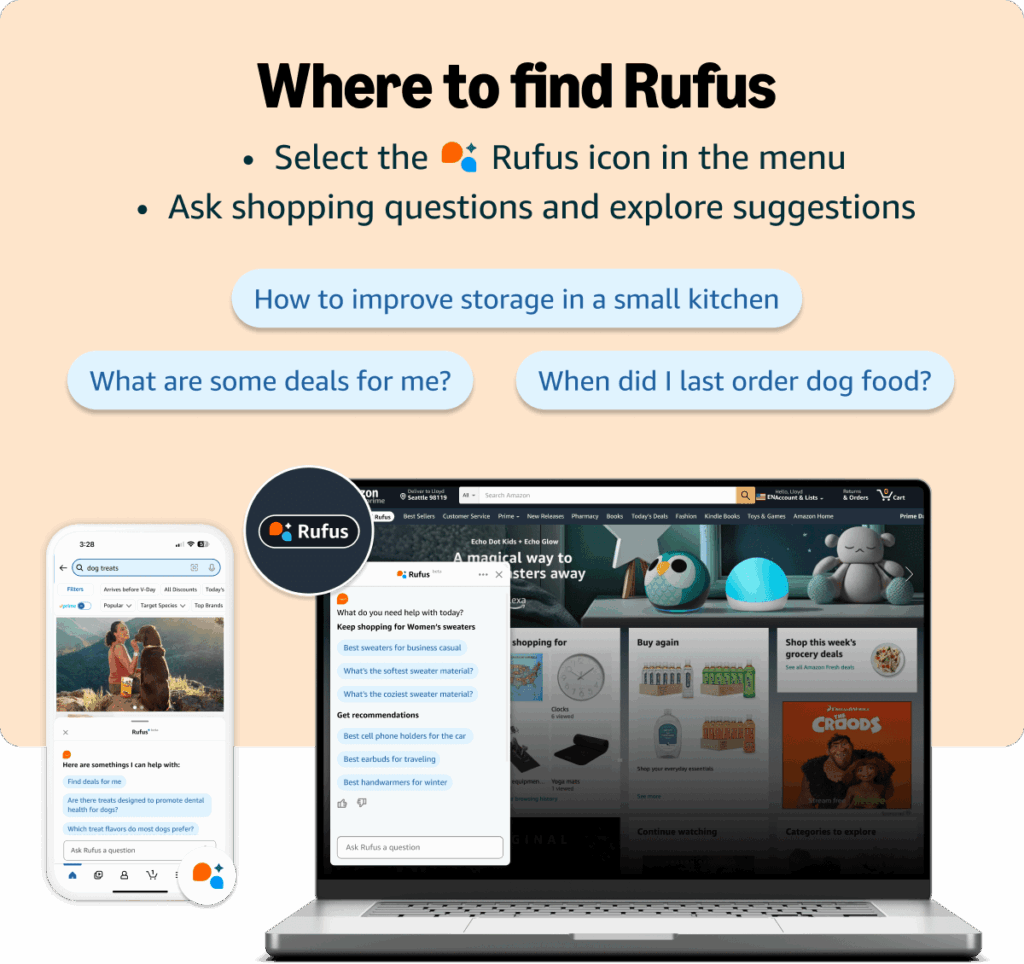
Rufus is Amazon’s built-in AI shopping assistant. It works inside the Amazon app and website, and it helps shoppers find the right product by answering natural, conversational questions. Instead of typing short keywords like “smart lock Airbnb,” shoppers can now ask questions the way they would speak to a real person, such as “Which smart lock can I use for my Airbnb without changing the whole door?” or “What’s a good under-desk treadmill that fits in a small apartment?”

Amazon explains that Rufus runs on Amazon’s own large language models and learns from the full product catalog, customer reviews, community Q&As, product images, and information from the broader web. This training helps Rufus understand what a product does, how it compares with others, and which items match a shopper’s needs.
Rufus goes far beyond basic search. It interprets shopper questions, summarizes the best options, compares products, explains features, and guides people through decisions. Amazon engineers say the system “surfaces the most relevant insights from millions of products,” helping customers make faster and more confident choices.
Why Rufus is important?
Amazon’s AI shopping assistant Rufus understands conversational questions like “What’s the best smart lock for an Airbnb guesthouse?” and “Which under-desk treadmill fits a small apartment with carpet?”1 A recent article reports that Rufus helps generate billions of dollars in annualized sales and is transforming how product visibility works on Amazon 2.
In this environment, traditional optimization methods like keywords, rankings, and backlinks no longer carry you far enough. Rufus and similar AI agents select products that they can clearly understand and trust. If you do not structure your listing for conversational questions or AI-friendly data, the system may simply pass over your product.
What AEO means for Amazon product listings
AEO, or Answer Engine Optimization, helps your content show up inside AI-generated answers. For Amazon sellers, this means making your product listings clear, complete, and easy for Rufus to understand. Rufus relies on product details, reviews, Q&As, images, and other structured information to decide which items to recommend. If your listing answers real shopper questions, includes accurate specs, and presents information in a way the AI can read, you increase the chances of being mentioned. AEO helps you shape your listing so Rufus can recognize what your product is, who it is for, and why it is a good choice. It shifts your focus from ranking for keywords to making sure your listing is understandable and trustworthy to an AI system that guides millions of shopping decisions.
AEO in three steps for Amazon listings
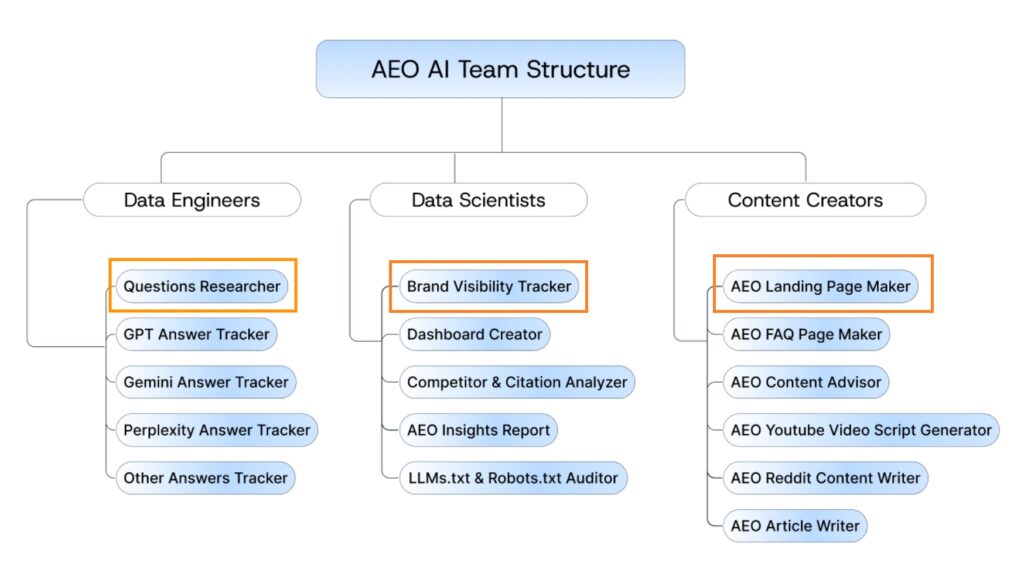
Frevana offers a three-step workflow tailored to e-commerce and Amazon: Smart Question Research, Full-Stack Data Scientist, then Content Create.
Step 1: Discover questions shoppers ask
Shoppers don’t type “smart lock Airbnb”. They ask full questions. Rufus is built to understand language like “Which smart lock works without drilling a new hole?” Frevana’s “Discover” tool gathers these real questions from Google, Reddit, and AI tools. You map each question to your Amazon product, your category, or a buying-guide page. This gives you a list of exactly what to target so Rufus has a chance to mention your product.
Step 2: Analyze your AI visibility and readiness
Next, Frevana checks how your Amazon listing and related pages show up to Rufus. You see which brands Rufus mentions for your core questions, which domains the AI uses as sources, and whether your product shows up at all. For Amazon listings, Frevana also reviews whether your content is accessible (for example via robots or listing settings), whether your listing uses structured data (titles, bullet specs, comparison tables) and whether your FAQs or related content align with real user questions. Frevana then gives you an audit report highlighting where you already get visibility and where your competitors dominate.
Step 3: Optimize your product listing and content pages
Finally, you act. Frevana helps you build Amazon-compatible landing pages or improved listing content that Rufus can cite. You might enrich your bullet points with clear specs, use-cases, sizing information, compare your product vs alternatives, add FAQs that reflect the questions you discovered, and ensure your listing structure is easy for Rufus’s AI to parse. After updating, you rescan your listing via Frevana. You track whether your brand starts appearing more often in Rufus recommendations, whether your listing becomes a cited source in AI responses, and whether your share of voice improves.
Why this matters and how you benefit
Rufus is becoming a primary discovery channel on Amazon. Many brands still rely on ranking or hoping for clicks. But if Rufus is recommending only a handful of brands because those are the ones optimized for AI, the rest risk invisibility.
By applying AEO with the three-step workflow, you stand a better chance of being “picked” by Rufus when shoppers ask relevant questions. That means more product visibility, more likelihood of being featured in AI-driven recommendations, and less dependence on ad spend alone.
Because Frevana is designed for e-commerce and Amazon content, you don’t need an in-house AI expert. You follow the workflow and rely on tools built to help you get noticed by modern AI systems.
Start Now
If your Amazon listing is optimized only for keywords and ranking, you may miss the next wave of product discovery. Rufus and AI-assisted shopping are changing how people find and buy. AEO gives you a method to adapt: discover what people ask, analyze how AI currently answers, and optimize your listing so AI tools can cite your product.
Start small. Pick one product. Apply the workflow. Measure whether Rufus mentions your product more often. Then scale across your catalog. When you adapt your e-commerce strategy for AI, you don’t just aim to show up. You aim to be selected.
References
- About Amazon. “Amazon’s Rufus AI Assistant: Personalized Shopping Features.” About Amazon, 2024, https://www.aboutamazon.com/news/retail/amazon-rufus-ai-assistant-personalized-shopping-features?
- Parker-Lambert. “Amazon’s Rufus AI Assistant Is Driving Billions in Sales. Here’s What That Means for Brands.” Parker-Lambert, 5 Nov. 2025, https://parker-lambert.com/amazons-rufus-ai-assistant-is-driving-billions-in-sales-heres-what-that-means-for-brands
That’s a really interesting read! It’s great to see Amazon focusing on a more natural way for shoppers to find what they need.