
Win Answer Economy with Frevana
The Shift in Online Search
While Search Engine Optimization (SEO) has shaped the e-commerce landscape as we know it, it’s contingent upon consumers using search engines to discover products. For the past two decades, more than half of all web traffic flowed to the top-ranking organic links on search engines—until now.
The rise of AI-driven tools and generative search engines, such as ChatGPT, Perplexity, Google’s Search Generative Experience (SGE), and Amazon’s AI Shopping Guides, is changing consumer behavior. Instead of discovering products through traditional search engine results pages, consumers are turning to chat-based AI platforms for faster, more direct answers and recommendations.
According to recent studies, zero-click answers—when Google or other engines provide direct answers, product recommendations, or snapshots at the top of results—now make up most searches. As a result, users now get what they need without clicking through to any website. The Search Engine Journal reports that more than half of all searches no longer result in a traditional click because AI-generated summaries and recommendations display the answers directly in search results.
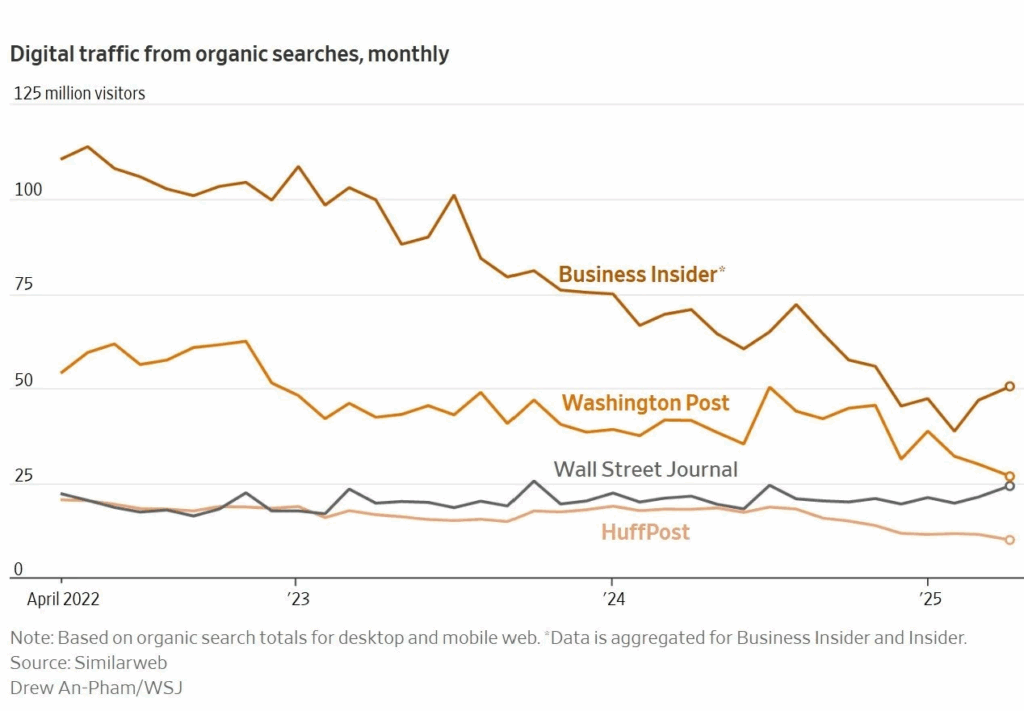
Figure 1. Digital traffic from organic searches are decreasing monthly, underscoring the shift from SEO to AEO.
Recent studies show that nearly 60% of shoppers now use AI tools to guide their buying decisions, often relying on chat-based platforms like Amazon’s AI Guides or Perplexity’s product suggestions (Darden News). That’s where Answer Engine Optimization (AEO) comes in. Instead of chasing keywords like traditional SEO, AEO focuses on making sure your products appear in the AI-generated answers, summaries, and suggestions that shoppers see instantly.
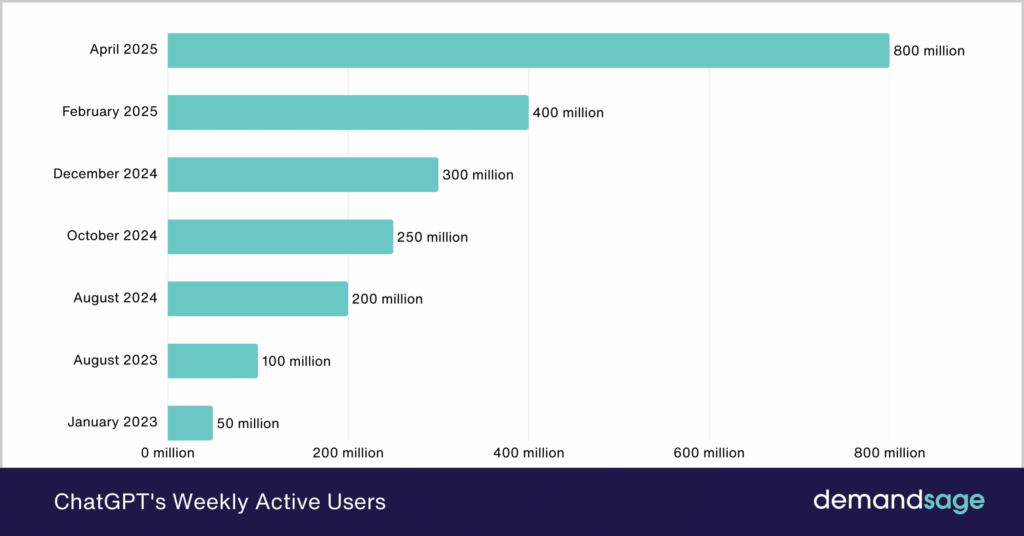
Figure 2. ChatGPT’s weekly active users till April, 2025.
AEO vs. SEO – What’s Changing?
SEO’s logic is simple: get seen, get clicked. AEO changes that to “get cited, get trusted.” The following chart breaks down the strategic and functional differences between SEO and AEO:
| SEO | AEO | |
| Goal | Rank high in SERPs, attract clicks | Be cited in AI-generated answers/results |
| Optimization Focus | Keywords, backlinks, technical SEO | Structured data, content for direct answers |
| Content Strategy | Long-form, keyword-rich pages | Concise, answer-oriented, up-to-date data, persistent |
| Discovery Point | SERP listings | Answer engine results, chatbot module |
| Tactics | Meta tags, on-page SEO, link-building | Product landing page, FAQs, schema, APIs |
| Measurement | Ranks, organic traffic, click volume | Inclusion rates in AI answers, engagement |
| User Journey | Visitor lands on your site | User may never visit your site; visibility achieved via direct citation |
In this new era of search and discovery, the success of e-commerce brands increasingly depends on whether or not they adopt AEO practices. Gaining visibility in AI answers requires a restructuring of data, clear answers to key questions, and complete optimization of content for AI engines.
Strategic Implications for E-Commerce
There’s a big upside here. When AI tools regularly mention or cite your brand, you gain instant credibility.
To build that kind of trust, e-commerce brands should:
- Structure data clearly. Structure AI accessible domain source, use rich schema, product feeds, and connected knowledge sources so AI can easily read and quote your information.
- Create useful content. Write clear guides, FAQs, and expert tips that AI tools can pull from when giving answers.
- Earn mentions from others. Get reviews, press features, or influencer mentions—these are the sources AI often references.
- Keep your product info fresh. Make sure prices, details, and stock data stay accurate and updated.
In the AEO era, success isn’t about getting the most clicks or running the biggest ads. It’s about becoming a trusted source that AI systems rely on. Brands that make their content clear, credible, and up to date will win visibility, and subsequently, customer trust.
5 Steps to Boost Your AEO performance
Step 1: Run an Industry-Level Audit
Start by evaluating your brand’s AI visibility: how often, if at all, is it being cited in AI results?
Goal: Understand where your brand stands and what drives visibility in AI search.
What to Do:
- Search your category in ChatGPT, Gemini, and Perplexity.
- Note which brands appear most often and why.
- Compare how your content stacks up against theirs.
- Identify gaps and set clear visibility goals.
Step 2: Check Accessibility and Domain Health
Make sure AI engines can actually reach your site. AI crawlers rely on files like LLMs.txt, Robots.txt, and sitemaps to access your data, so missing or blocked files can hide your content completely.
Goal: Let AI platforms easily read and understand your site’s content.
What to Do:
- Verify that your Robots.txt and LLMs.txt allow AI access.
- Audit your sitemap and metadata for errors.
- Check that your product pages load cleanly in HTML, not just scripts or images.
- Fix any technical barriers that limit AI indexing.
Step 3: Research Real Customer Questions
Find out what people actually ask before buying; most users now type full questions rather than short keywords.
Goal: Match your content to real user intent and shopping behavior.
What to Do:
- Collect real user questions from search tools, forums, and AI platforms.
- Group them by topic—price, quality, size, trust, or performance.
- Rewrite your content to answer these questions directly.
- Add any missing topics that are covered by your competitors.
Step 4: Measure AI Visibility and Mentions
Track how often AI tools cite or recommend your brand. Clicks are no longer the main signal—visibility in AI answers is.
Goal: Measure success by how often AI cites your brand.
What to Do:
- Test prompts related to your category each week.
- Record which brands appear in AI answers, and how they’re described.
- Track your mentions across platforms like ChatGPT, Perplexity, and Gemini.
- Compare your performance with competitors and adjust your content.
Step 5: Create AI-Readable Content
Write content that AI can read, quote, and trust. AI tools favor structured, factual, and concise information over long promotional copy.
Goal: Make your content easy for AI to process and credible enough to cite.
Do this:
- Add schema markup for products, FAQs, and reviews.
- Write short, clear product descriptions with measurable details.
- Build FAQ pages based on real customer questions and your product details.
- Create product landing pages for marketplace products so AI can cite them directly.
- Keep all product details, like price, stock, features, up to date.
AEO For Local Businesses
The importance of AEO extends to all businesses, including local brick and mortar shops. If your business information (such as hours, menu, or customer reviews) isn’t clear and easy for AI tools to read, you might not show up in AI answers.
Think about a pizza place in your neighborhood. If they use the right tools and answer common questions, like whether they have gluten-free pizza or any special deals, AI can recommend them first when someone asks for pizza nearby in a voice search. Or, if a small electronics shop keeps its info and reviews up to date, it might get suggested to someone looking for a “phone charger near me,” even over big stores.
AEO gives local businesses a powerful way to stay visible and competitive in an era where most customers get answers directly from AI tools instead of browsing websites. In other words, AEO helps local businesses meet people where they’re searching, turning quick AI answers into real-world visits, sales, and community recognition.
AEO Is Urgent: The Future of E-Commerce Visibility Starts Now
Leaders in e-commerce are already changing how they work; they’re shifting to an AEO-first mindset. This means making content readable for AI, tracking how often AI platforms mention their products, and continuously improving visibility through structured, trustworthy information.
To make this transition smoother, platforms like Frevana can help accelerate the process. They simplify the work by auditing your brand’s AI presence, identifying where you’re missing citations, and helping you build content that answer engines love to feature.
Brands that act now will gain an early advantage in AI-driven e-commerce, while those that hesitate will quickly fall behind in visibility and relevance.