
AI is making brand ad production faster, but the best workflow is not “generate random ads and hope one works.”
The better approach is to study what is already working, adapt the winning structure to your brand, create many variations, and repurpose the best concepts across platforms.
Here is a simple workflow using Codex and GPT Image 2.
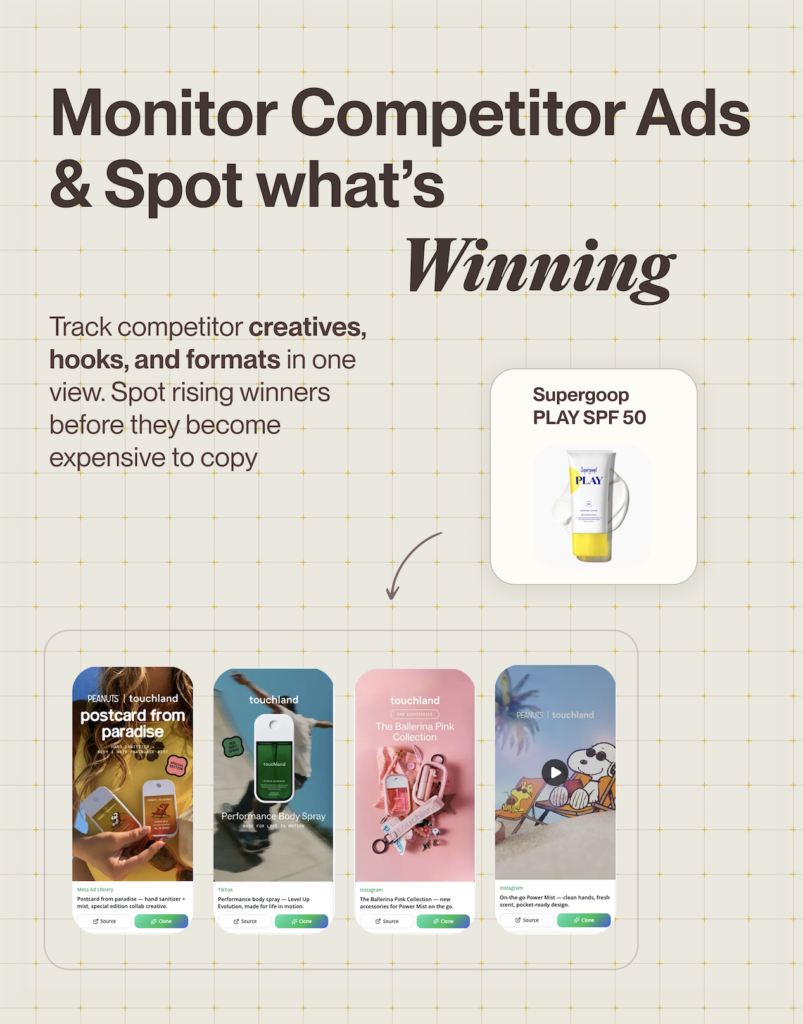
Step 1: Monitor Competitor Ads & Spot What’s Winning
Start by tracking competitor creatives, hooks, and formats in one view.
Look for ads that are showing up repeatedly, getting refreshed, or appearing across multiple platforms. These are often signs that a concept is working.
| What to Track | What to Look For |
|---|---|
| Creatives | Product shots, lifestyle scenes, UGC, comparison layouts |
| Hooks | First line, opening frame, visual stop-scroll moment |
| Formats | Feed ads, story ads, TikTok-style videos, banners |
| Offers | Bundles, drops, seasonal campaigns, discounts |
| Angles | Problem-solution, aspiration, routine, social proof |
The goal is to spot rising winners before they become expensive to copy.
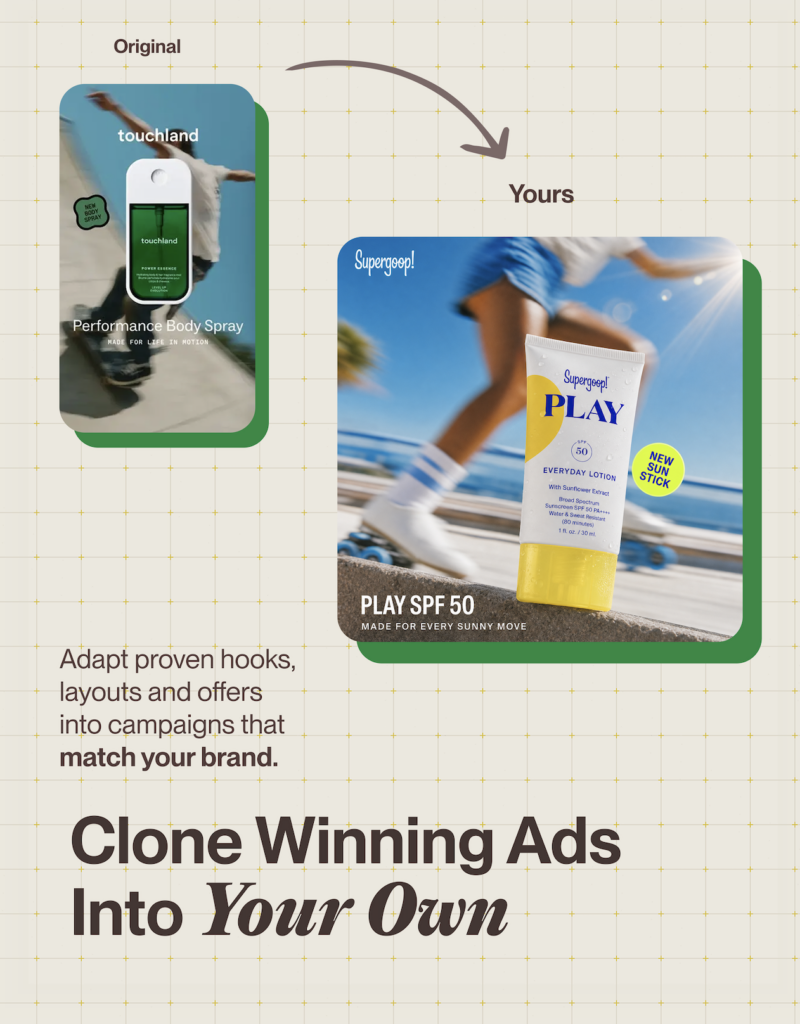
Step 2: Clone Winning Ads Into Your Own
Once you find a strong ad pattern, do not copy it directly.
Use Codex to break down the creative logic, then use GPT Image 2 to rebuild the concept with your own product, brand colors, messaging, and audience.
| Competitor Pattern | Your Brand Version |
|---|---|
| Product in motion | Your product in an active lifestyle scene |
| Seasonal drop | Your own seasonal campaign or bundle |
| UGC-style demo | Your product shown in a natural customer-use moment |
| Bold product close-up | Your own packaging and brand identity |
| Before-and-after layout | Your own transformation or comparison story |
The goal is to adapt proven hooks, layouts, and offers into campaigns that match your brand.
Example Codex prompt:
Analyze this ad. Identify the hook, layout, offer, product positioning, emotional angle, and why it may work. Then turn it into 5 original ad concepts for my brand without copying the competitor’s exact creative.
Step 3: Create Hundreds of Ad Variants in Seconds
After you have one strong concept, use GPT Image 2 to generate many creative directions quickly.
Test different hooks, scenes, formats, audiences, and offers.
| Variant Type | Examples |
|---|---|
| Hook variants | “Made for every sunny move,” “Your daily SPF upgrade,” “Summer starts here” |
| Scene variants | Pool, beach, tennis court, city walk, travel bag |
| Offer variants | New launch, bundle, limited-time drop, gift set |
| Audience variants | Athletes, travelers, skincare lovers, outdoor users |
| Visual styles | Premium, playful, editorial, UGC, clean product-led |
Example GPT Image 2 prompt:
Create a bright summer skincare ad for a sunscreen brand. Show the product in the foreground with a sporty outdoor lifestyle background. Use a bold blue sky, warm sunlight, glossy skin texture, and clean premium beauty branding. Leave space at the bottom for headline text.
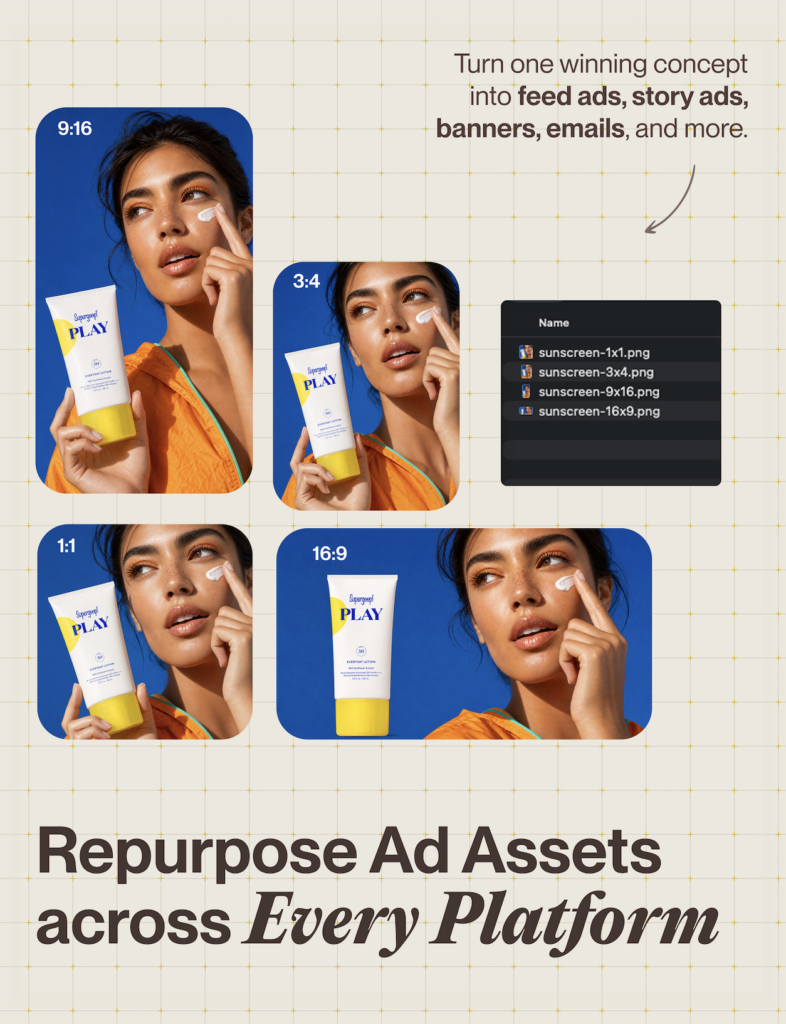
Step 4: Repurpose Ad Assets Across Every Platform
Do not let one winning concept live in only one format.
Turn it into feed ads, story ads, banners, emails, and more.
| Platform / Use Case | Recommended Format |
|---|---|
| Instagram Stories | 9:16 |
| TikTok | 9:16 |
| Instagram Feed | 1:1 or 3:4 |
| Meta Feed Ads | 1:1 or 4:5 |
| Website Banner | 16:9 |
| Email Header | 16:9 or custom width |
| Landing Page Section | 3:4 or 16:9 |
One winning concept can become a full creative system.
Simple Workflow
| Step | Action |
|---|---|
| 1 | Monitor competitor ads and spot what is winning |
| 2 | Clone winning ad structures into your own brand |
| 3 | Create hundreds of ad variants in seconds |
| 4 | Repurpose ad assets across every platform |
Brand Safety Checklist
Before publishing AI-generated ads, review every asset.
| Check | Why It Matters |
|---|---|
| Product accuracy | Packaging, label, and product details must be correct |
| Brand consistency | Visuals should match your brand identity |
| Legal safety | Do not copy competitor assets, slogans, or trademarks |
| Text readability | Make sure copy is clear on mobile |
| Platform fit | Resize and crop for each placement |
| Claim compliance | Avoid unsupported claims |
How Frevana Uses This Workflow
At Frevana, we help brands turn AI into a creative production engine.
We use Codex to structure ad research, creative briefs, prompts, and testing plans. Then we use GPT Image 2 to create original, on-brand ad visuals and variations.
The result is faster creative production, more ad variants, and a repeatable system for scaling winning ads with AI.
FAQ
Can I use AI to copy competitor ads?
No. Use competitor ads for research, not direct copying. Study the hook, layout, offer, and format, then create original assets for your own brand.
What is Codex useful for in this workflow?
Codex helps organize the creative process: competitor analysis, campaign briefs, prompts, copy variations, asset specs, and testing plans.
What is GPT Image 2 useful for?
GPT Image 2 helps generate and edit brand ad visuals, product scenes, campaign images, and multiple ad variations.
What formats should I create?
Start with 9:16 for TikTok and Instagram Stories, 1:1 or 3:4 for feed ads, and 16:9 for banners, websites, and email.
What is the biggest mistake brands make with AI ads?
The biggest mistake is generating random creative without a strategy. Start with winning patterns, then adapt them to your brand.