
1. Introduction: The Changing World of Online Search
The way we find information online is changing fast. The days of scrolling through a list of “ten blue links” on Google are fading away, replaced by direct, conversational answers delivered by AI-powered tools like ChatGPT, Google’s AI Overviews, Perplexity, and Amazon’s AI Guides. Instead of sending you to websites, these answer engines summarize, recommend, and compare—often without requiring a single click.
So where do brands fit into this new ecosystem? The answer is Answer Engine Optimization, or AEO. If you want your business, product, or expertise to appear in this new crop of AI-generated answers, AEO is essential.
2. What is AEO? (Definition)
Answer Engine Optimization (AEO) is the practice of preparing and structuring your content so that AI-powered answer engines can understand, trust, and present it directly inside their generated responses.
In other words: AEO is about making your website, product, or know-how visible in the answers AI tools generate—not just in traditional search results. If SEO built your presence in the search results, AEO builds your presence inside the answer itself.
This shift matters: With over half of online interactions now ending without a click to a website, being cited directly by an AI model has become the new frontier for digital visibility and brand trust.
3. AEO vs SEO: What’s Different?
Let’s break down the difference:
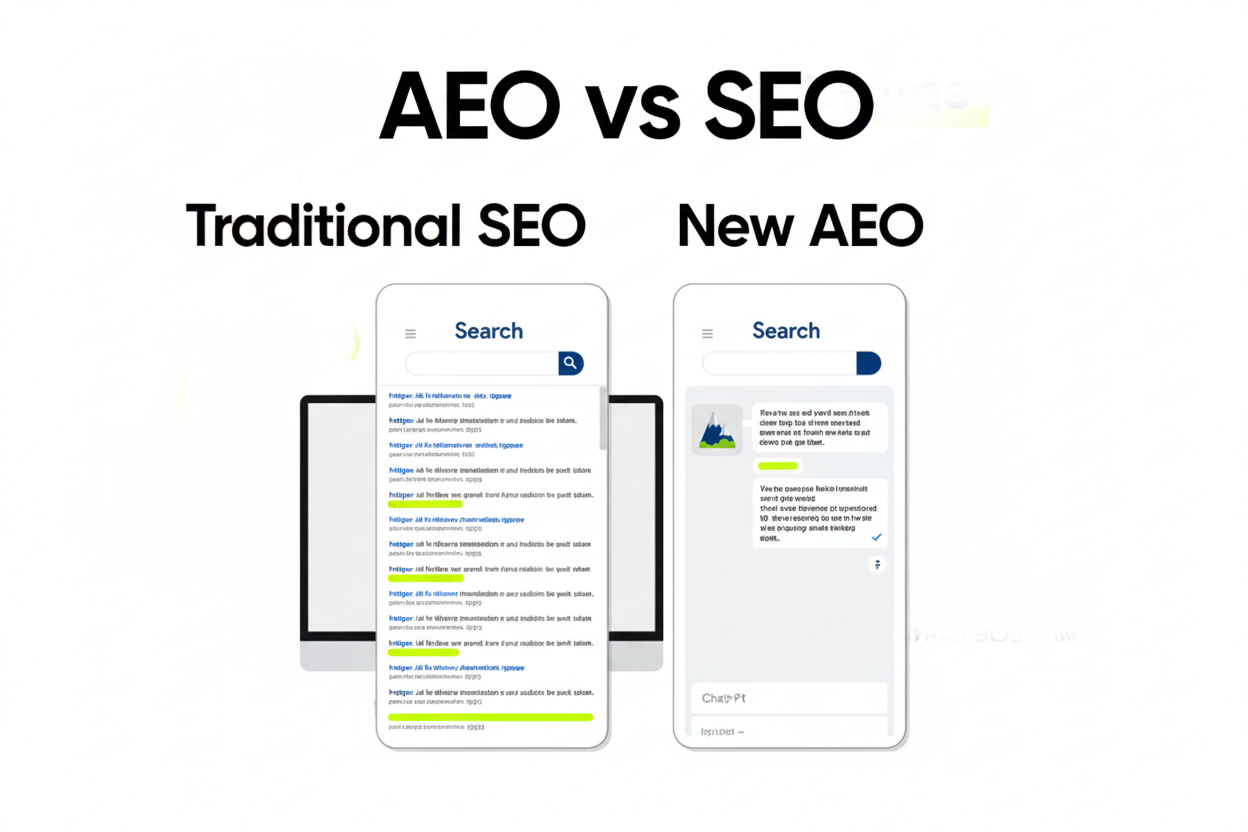
- SEO is about ranking your web pages high on classic search engines like Google and Bing. Its tactics focus on keywords, backlinks, and technical website tweaks. The goal: get people to click through to your site.
- AEO is about getting AI engines to include your content, brand, or expertise within their direct answers—whether that’s in ChatGPT’s summary, Google’s AI Overview, or Amazon’s AI shopping guide. You’re no longer just another link; the AI speaks with your voice or facts.
Analogy:
SEO is like auditioning for a stage performance—the higher you rank, the closer you get to the front of the stage. AEO is about getting your lines actually written into the script. Only the script gets heard by the audience.
Why does this matter? If the AI doesn’t cite you, your brand risks being invisible—even if you’ve done traditional SEO perfectly.
4. Is AEO Just a Buzzword or a Real Strategy?
Skepticism is natural—is AEO just the latest digital marketing fad?
The evidence says no. AI-driven search isn’t a futuristic vision; it’s rapidly becoming standard. According to recent studies, more than half of online searches now result in “zero-click answers.” Amazon, Google, Microsoft Copilot, Perplexity—they’re all building environments where AI summarizes the research and recommendations before the user ever considers clicking a link.
AEO isn’t about replacing SEO, it’s about extending optimization to where modern search happens. Consumer behavior is shifting fast, and brands that adapt will capture trust, visibility, and recommendation within these new interfaces. Businesses that wait risk being left off the list entirely.
5. Frevana’s Perspective: Bridging SEO and AEO
At Frevana, we spotted this change early: AI-driven search is the new battleground for digital visibility. It’s not enough for your brand to be “findable”—you need to be included in the answer, cited by the AI, and trusted instantly.
Our platform is designed with this shift in mind. Frevana provides solutions that help businesses bridge the gap between SEO and AEO—ensuring your content is not only discoverable, but actually present in the answers that power the future of search and commerce.
6. Conclusion
In short: AEO isn’t a passing trend—it’s the natural evolution of optimization for a world where answers, not links, drive visibility.
If you want to future-proof your brand’s presence, it’s time to think beyond search rankings and start optimizing for answers.