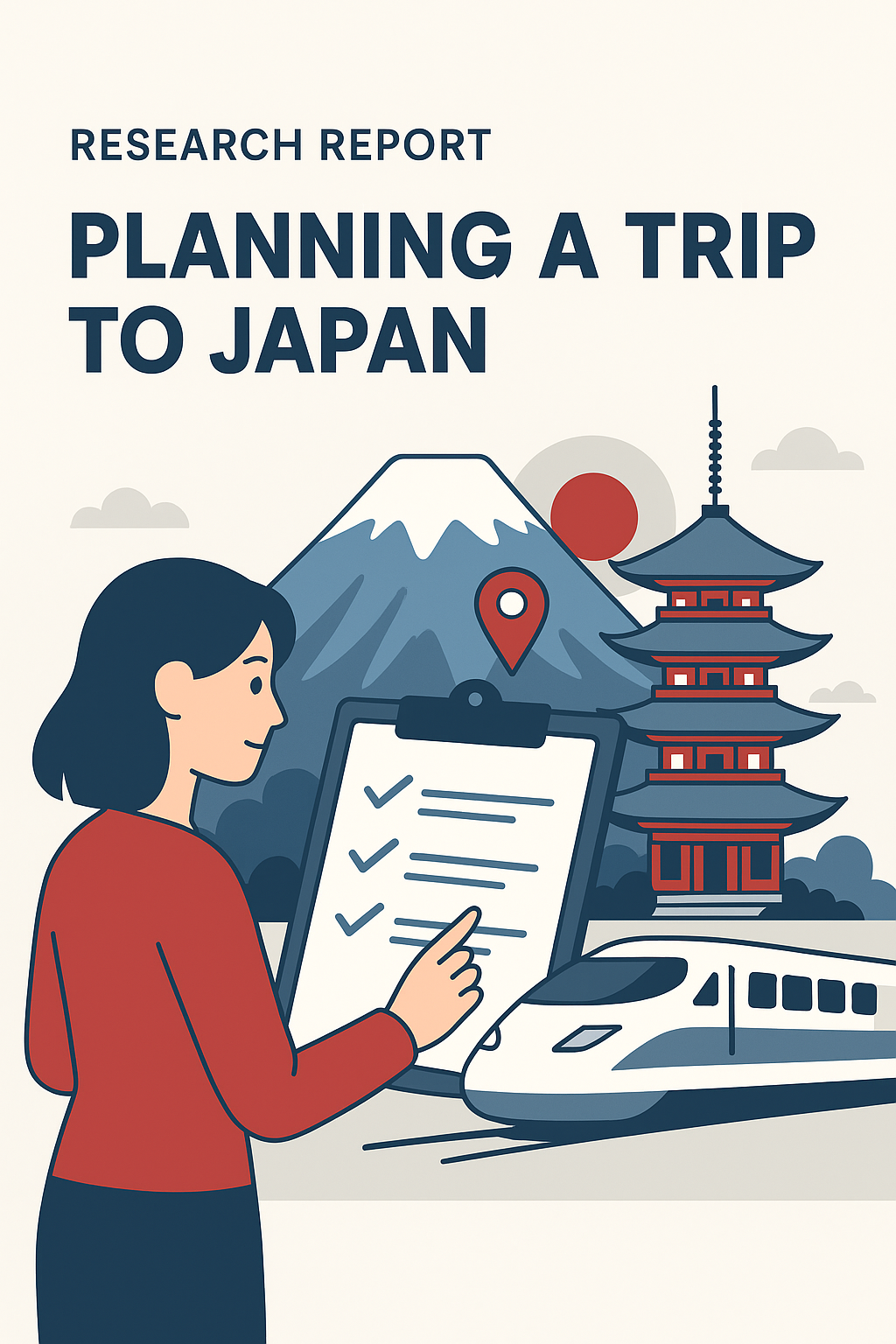
Research Report: Planning a Trip to Japan
Executive Summary
Japan, an archipelago in East Asia, offers a unique blend of ancient tradition and cutting-edge modernity. From its bustling cities and scenic countryside to cultural practices, culinary experiences, and efficient transport systems, Japan attracts millions of international visitors annually. Planning a trip to Japan requires careful consideration of several elements including destination selection, budget, visas, seasonality, cultural norms, and logistics. This report provides a comprehensive overview on how to effectively plan a memorable and hassle-free journey to Japan.
1. Destination Overview
Japan consists of four main islands—Honshu, Hokkaido, Kyushu, and Shikoku—and numerous smaller ones. Popular destinations include:
- Tokyo: Modern metropolis famous for technology, shopping, entertainment, and dining.
- Kyoto: Known for ancient temples, traditional tea houses, geisha districts.
- Osaka: Renowned for vibrant street food, nightlife, and Osaka Castle.
- Hiroshima: Historical sites including the Peace Memorial Park.
- Nara: Ancient capital with famous deer park and temples.
- Hokkaido: Nature, ski resorts, and unique cuisine.
- Okinawa: Beaches, subtropical climate, and Ryukyuan culture.
- Mount Fuji Area: Outdoor activities, hot springs.
2. Best Times to Visit
- Spring (March–May): Cherry blossoms (sakura); peak tourist season; mild weather.
- Autumn (September–November): Vivid autumn foliage; fewer crowds; pleasant temperatures.
- Summer (June–August): Hot and humid; festival season; risk of typhoons late summer.
- Winter (December–February): Snow sports in Hokkaido and Nagano; illuminations and less crowded urban sites.
3. Budgeting and Costs
Japan has a reputation for being expensive, but there are options for various budgets.
- Flights: Round-trip from US/Europe: $700–$1,500 depending on season.
- Accommodation: Hostels ($20–$40/night); Business hotels ($60–$120); Ryokan ($100–$500+).
- Food: Budget meals ($5–$10); Mid-range restaurant ($15–$30).
- Transport: Japan Rail Pass ($220–$450 for 7–21 days); local metro (~$2–$4 per ride).
- Sightseeing: Most temples/shrines ($2–$5 entry); museums ($5–$15).
4. Visa and Entry Requirements
- Short-term tourism: Many nationalities (e.g., US, EU, Australia) receive visa-free entry for up to 90 days.
- ETA or E-Visa: Some countries require an electronic travel authorization.
- Passport Validity: Ensure at least 6 months validity from entry date.
- COVID-19 Considerations: Check for current travel restrictions, health documentation, or quarantine rules.
5. Transportation
Intercity
- Shinkansen (Bullet Train): Fast, efficient; covered by Japan Rail Pass.
- Express/Rapid Trains: Cheaper but slower; also accept IC cards.
- Domestic Flights: Efficient for longer distances (e.g., Tokyo to Okinawa).
Within Cities
- Metro/Subway: Tokyo, Osaka, Kyoto have extensive networks.
- Buses: Useful in rural or less accessible areas.
- IC Cards: Suica, PASMO, ICOCA—rechargeable cards usable on most public transport.
- Taxis: Expensive but convenient; cash/IC card payments.
6. Accommodation
- Hotels: International and Japanese chains widely available.
- Ryokan: Traditional inns with tatami floors, futon bedding, and kaiseki meals.
- Capsule hotels: Affordable, unique Japanese experience.
- Airbnb: Increasingly popular but check for regulation updates.
- Hostels and Guesthouses: Budget-friendly and social.
7. Itinerary Planning
- Interests: Culture, history, nature, food, pop culture (anime/manga/games).
- Travel Pace: Allow time for shopping, relaxation, and unplanned discoveries.
- Advance Bookings: Required for peak season, ryokan stays, and certain attractions.
- Regional Passes: Consider for cost savings based on your route.
8. Cultural Etiquette
- Shoes: Remove in homes, some restaurants, temples, and ryokan.
- Behavior: Quiet on trains/public spaces; avoid phone calls.
- Tipping: Not customary; politeness and respect are valued.
- Bathing: Follow onsen rules—wash before entering communal baths.
9. Food and Drink
- Ramen, Sushi, Sashimi, Okonomiyaki, Takoyaki, Kaiseki, Izakaya fare
- Convenience Stores (Konbini): Affordable and good quality meals.
- Dietary Needs: Vegetarian, vegan, halal options increasing in major cities, but limited in rural areas.
- Drinks: Green tea, sake, local beers.
10. Packing Essentials
- Plug Adapter: Japan uses Type A/B (100V, 50/60Hz).
- Clothing: Adapt for season; layers for spring/autumn.
- Comfortable shoes: For extensive walking.
- Medications: Bring prescription/OTC as some are restricted.
- Travel Insurance: Highly recommended.
11. Safety and Health
- Crime: Low; Japan is among the world’s safest countries.
- Natural Disasters: Earthquakes, typhoons—register with home embassy, follow local alerts.
- Health Care: High quality; bring travel insurance and any necessary documentation for prescriptions.
- Emergency Number: 110 (police); 119 (fire/ambulance).
12. Technology and Connectivity
- SIM Cards & Pocket WiFi: Rent/buy at airport for internet access.
- Cash vs Cards: Cash is widely used; cards accepted at many but not all establishments.
- Language Apps: Google Translate app helpful; limited English outside major tourist sites.
13. Sustainability in Travel
- Public Transport: Minimizes carbon footprint.
- Local Businesses: Choose small inns and shops.
- Respectful Tourism: Avoid over-touristed spots at peak times, follow local guidelines.
14. Sample Itinerary (10 days)
| Day | Destination | Activities |
|---|---|---|
| 1 | Tokyo | Meiji Shrine, Harajuku, Shibuya |
| 2 | Tokyo | Asakusa, Akihabara, Ueno |
| 3 | Nikko | Day trip: World Heritage temples |
| 4 | Hakone | Onsen, Lake Ashi, Mt. Fuji views |
| 5 | Kyoto | Fushimi Inari, Kiyomizu-dera |
| 6 | Kyoto | Arashiyama, Bamboo groves |
| 7 | Nara | Daibutsu, Nara Park |
| 8 | Osaka | Dotonbori, Osaka Castle |
| 9 | Hiroshima | Peace Park, Miyajima Island |
| 10 | Return to Tokyo/Departure |
15. Recommendations
- Book accommodation and rail passes well in advance, especially during sakura and Golden Week.
- Learn a few basic Japanese phrases; carry translation aids.
- Try local foods and stay in a ryokan for a unique experience.
- Always respect local customs and keep public areas clean and orderly.
- Travel insurance is essential for peace of mind.
Conclusion
Japan is a rewarding travel destination with something for every interest and age group. With careful planning, respect for local norms, and smart budgeting, travelers can experience the best of Japan’s culture, nature, and hospitality. Early preparation and local research will ensure a smooth, memorable trip.
References
- Japan National Tourism Organization (JNTO): https://www.japan.travel/en/
- Lonely Planet, “Japan Travel Guide”
- Official Japanese Government Immigration website
- Guidebooks (e.g., The Rough Guide to Japan, Fodor's Japan)
- Travel blogs and first-hand traveler accounts