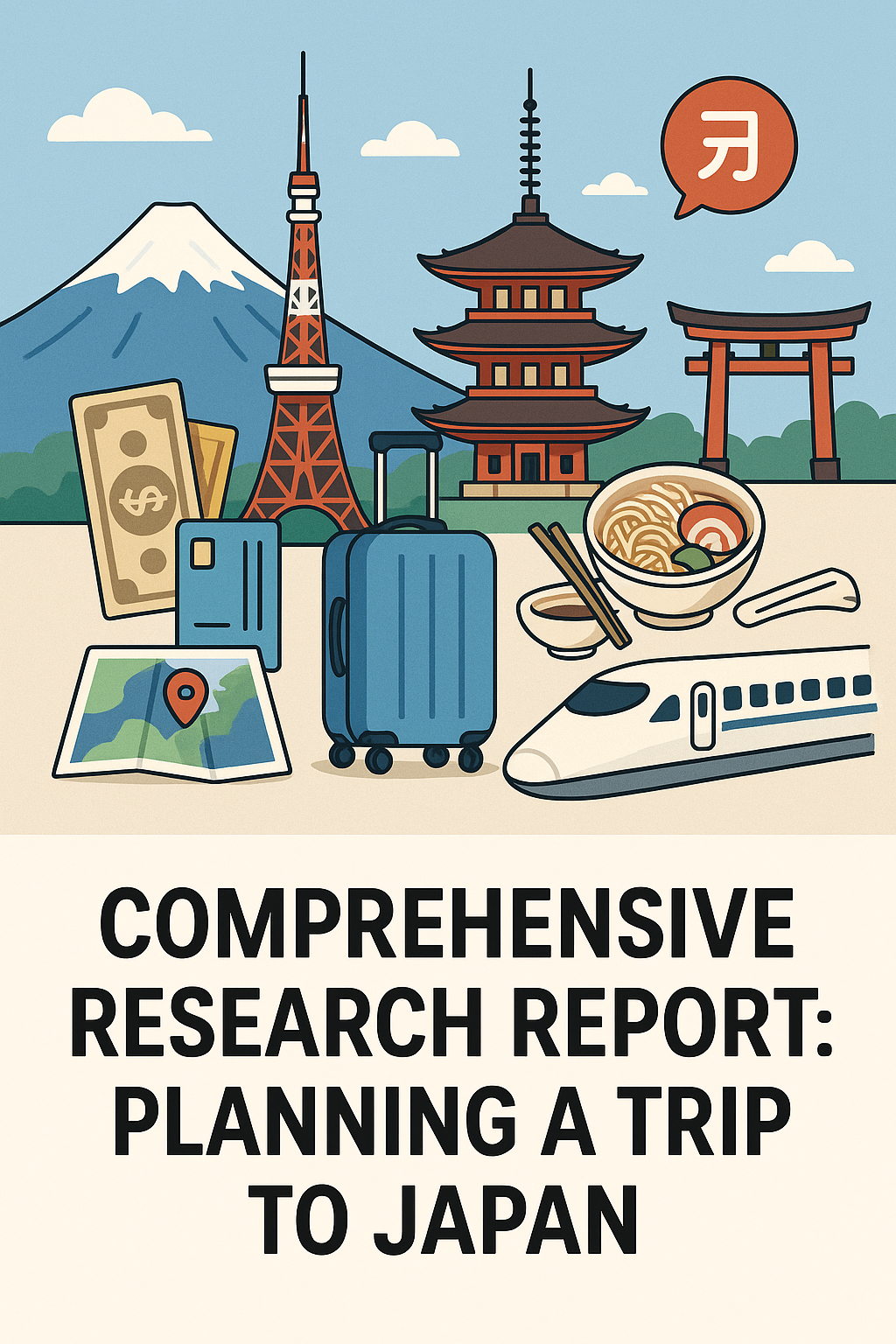
Comprehensive Research Report: Planning a Trip to Japan
Critical insights for first-time and returning visitors
1. Introduction
Japan is a mesmerizing blend of ancient tradition and cutting-edge modernity. Planning a trip to Japan can be both exciting and overwhelming due to the variety of experiences the country offers. This report outlines critical factors to consider for an optimal travel experience in Japan, catering to first-time visitors and seasoned travelers alike.
2. Objectives
- Identify important aspects for trip planning.
- Provide recommendations based on research and current trends.
- Address practicalities such as cost, transportation, cultural expectations, and safety.
3. Budgeting
Flight Costs
- From North America/Europe: USD $700–$1,500 roundtrip (economy).
- Within Asia: USD $200–$600 roundtrip.
On-Ground Expenses (per day)
- Budget traveler: $50–$80 (hostels, convenience store meals, local trains).
- Mid-range: $120–$250 (hotels, some restaurants, regional trains).
- Luxury: $350+ (4-star hotels, fine dining, taxis/private tours).
Currency
Japanese Yen (JPY). ATMs are widespread; 1 USD ≈ 140–150 JPY (recent rates).
4. Destinations
Major Cities
- Tokyo: Urban excitement, shopping, museums, culture.
- Kyoto: Historic temples, gardens, traditional arts.
- Osaka: Street food, nightlife, Universal Studios Japan.
- Hiroshima: Peace Memorial Park, Miyajima island.
- Sapporo: Northern city, winter festivals (if visiting in February).
Popular Regions
- Hokkaido (north): Nature, skiing, seafood.
- Okinawa (south): Beaches, unique Ryukyu culture.
- Alps Region (Nagano, Takayama): Mountain scenery, onsen (hot springs).
5. Transportation
Public Transport
-
Japan Rail Pass: Offers unlimited travel on JR trains (including Shinkansen bullet trains), best value for regional hopping. Purchase before entering Japan. 7, 14, and 21-day options.
Example cost: 7-day Ordinary Pass ≈ $335 USD. - IC Cards (Suica, Pasmo, Icoca): Prepaid cards for metros, buses, convenience stores. Usable nationwide.
- Domestic Flights: Efficient for long-distance (Tokyo to Sapporo/Okinawa).
Within Cities
- Efficient metro/subway systems in Tokyo, Osaka, Kyoto.
- Taxis available but expensive.
6. Accommodations
Types
- Hotels: Range from business to luxury western-style.
- Ryokan: Traditional Japanese inns (includes dinner, hot springs).
- Hostels/Capsule Hotels: Budget-friendly, unique experience (capsules mostly in cities).
- Minpaku (Airbnb): Regulated, usually must register passport.
Booking Tips
- Book several months in advance for cherry blossom or autumn leaf seasons.
- Check cancellation policies.
7. Culture & Etiquette
Essential Customs
- Bowing instead of handshakes.
- Remove shoes before entering homes and some traditional accommodations/restaurants.
- Quiet in public places (trains, buses).
- Queueing and waiting patiently is expected.
Do’s and Don’ts
- Do: Say “sumimasen” (excuse me/sorry), “arigatou” (thank you).
- Don’t: Speak loudly, eat while walking (unless at festivals), tip (not customary).
8. Best Time to Visit
- Spring (March–May): Cherry blossoms (sakura); busiest; mild weather.
- Autumn (September–November): Colorful foliage, comfortable climate.
- Winter (December–February): Skiing in Hokkaido/Nagano; festive illuminations.
- Summer (June–August): Festivals, fireworks; hot/humid except in northern areas.
Note: Avoid Golden Week (late April–early May) due to crowded travel.
9. Food & Dietary Considerations
Cuisine
- Sushi, ramen, tempura, okonomiyaki, yakitori, wagyu beef, Japanese sweets (wagashi).
Dining
- Many restaurants have English/pictorial menus.
- Convenience stores (7-Eleven, Lawson, FamilyMart) offer high-quality, cheap meals.
Dietary Needs
- Vegetarian/vegan options increasing but still limited outside major cities. Research ahead.
- Muslim-friendly and halal restaurants exist in Tokyo/Osaka/Kyoto.
10. Language
- Japanese is the official language.
- English signage common in major cities, stations, and tourist sites.
- Translation apps (Google Translate, Papago) highly recommended.
- Learning basic Japanese phrases helps:
- Hello: “Konnichiwa”
- Thank you: “Arigatou gozaimasu”
- Excuse me: “Sumimasen”
11. Safety, Health, and Connectivity
Safety
- Japan is one of the world’s safest countries; low crime rates.
- Take earthquake safety seriously; follow local instructions during emergencies.
Healthcare
- High-quality healthcare. Travelers should obtain insurance.
Connectivity
- Buy or rent a pocket WiFi or Japanese SIM card (pick up at airport).
- Free WiFi available in many public spaces but may require registration.
12. Additional Travel Tips
- Cash is still king: Not all establishments accept credit cards.
- Power plugs: Type A/B (same as US). Voltage is 100V.
- Trash bins are rare: Take your trash with you until you find one.
- Luggage services: Convenient door-to-door delivery (known as “takkyubin”).
13. Sample 10-Day Itinerary
- Day 1–4: Tokyo (Shibuya, Asakusa, Akihabara, Mt. Fuji day trip)
- Day 5: Hakone (onsen, Lake Ashi)
- Day 6–7: Kyoto (Fushimi Inari, temples, Gion)
- Day 8: Nara (Tōdai-ji, Deer Park)
- Day 9: Osaka (Dotonbori, street food)
- Day 10: Hiroshima & Miyajima (Peace Park, Itsukushima Shrine)
Travel using Shinkansen with Japan Rail Pass.
14. Conclusion
Japan offers an unparalleled blend of history, natural beauty, and modern innovation. Careful planning tailored to your interests, budget, and travel style will ensure you make the most of your journey. Keep cultural traditions in mind, prepare for logistics like transportation and money, and enjoy the immense diversity Japan offers every visitor.
References & Further Reading
- Japan National Tourism Organization (JNTO): www.japan.travel
- Hyperdia (train schedules): www.hyperdia.com
- Official JR Pass site: www.japanrailpass.net