Product Launch Checklist: Build AI Visibility Beyond Backlinks
Plan your product launch with a practical directory checklist. Use AEO tools to research citations, choose relevant channels, and measure AI visibility.
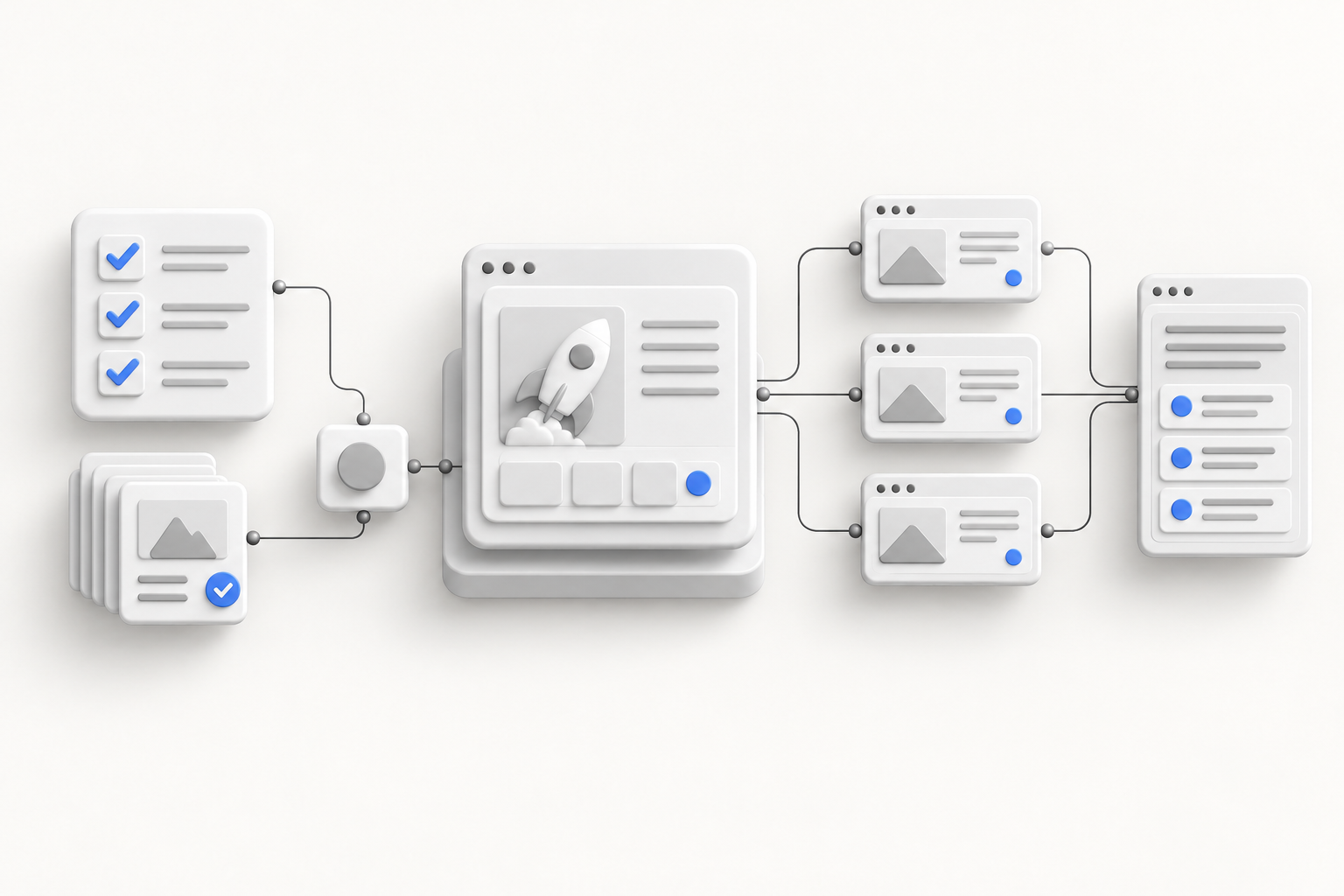
A long list of submission sites can make a product launch feel productive. But a listing on a platform your buyers never visit may contribute little beyond another URL to track.
A better launch plan connects three activities: publishing accurate product information, choosing relevant places to share it, and measuring what happens afterward. AEO tools can help you investigate AI visibility and citations, while launch platforms and directories help you introduce the product to appropriate audiences.
This checklist explains how to combine those activities. It replaces a volume-first backlink approach with a focused process for selecting channels, preparing listings, and reviewing results.
Backlinks, Brand Mentions, and AI Citations Are Different
A backlink is a link from another website to yours. A brand mention names your company or product. An AI citation identifies a source used in a generated answer, sometimes with a clickable link.
These outcomes can overlap, but one does not guarantee another. A directory can link to your website without appearing in any monitored AI answer. An assistant can mention your brand while citing an independent review. A useful guide on your own website can receive a citation without generating a product recommendation.
For launch planning, this distinction changes the goal. Seek placements that help real customers evaluate your product, then inspect whether those placements appear in relevant answers. Do not assume every new backlink increases AI visibility.
Google also identifies low-quality directory links and links created primarily to manipulate rankings as examples of link spam. Buying advertising or sponsorship is different from buying ranking credit; Google says paid links should be appropriately qualified. Read Google's link-spam policy.
Choose the Right Type of Launch Channel
The original checklist mixed directories, publications, hosting services, communities, and commercial marketplaces. Each requires a different approach.
| Channel type | What you are trying to achieve | What to prepare | What to measure |
|---|---|---|---|
| Product-launch platform | Introduce a new product and collect feedback | Product page, demonstration, launch explanation | Relevant visits, questions, trials |
| Software directory | Help buyers compare products in a category | Accurate description, use cases, pricing link | Profile quality, referrals, conversions |
| Technical community | Discuss a working project with likely users | Usable demo, technical context, thoughtful replies | Feedback quality, qualified engagement |
| Owned documentation | Explain how the product works | Setup guides, limitations, examples | Content use, support outcomes, citations |
| Editorial publication or newsletter | Earn coverage around a relevant story | Evidence, an original angle, useful assets | Coverage quality, referrals, inquiries |
A media outlet is not a self-service directory. A hosting service is not an independent endorsement. Treat each opportunity according to its purpose rather than its domain-level score.
Six Places to Evaluate for Your Product Launch
The following examples come from the source checklist and illustrate different channel types. They are not ranked, and inclusion does not imply guaranteed acceptance, backlinks, traffic, or AI citations. Check current submission terms before allocating time or money.
1. Product Hunt: A Dedicated Product Launch
Product Hunt provides a launch guide for makers sharing new products. Use it to understand the platform's launch process and prepare a clear presentation. Read the official Product Hunt launch guide.
Practical application: Explain the problem your product solves, show it working, and prepare to answer questions. Define success in terms of relevant feedback and product interest rather than treating launch-day attention as an SEO result.
2. DevHunt: Developer-Focused Discovery
DevHunt organizes developer tools across categories such as APIs, DevOps, testing, and databases. It is a candidate when developers are your intended users. Explore DevHunt.
Practical application: For an API testing tool, lead with supported workflows, a useful demonstration, and documentation. Confirm which listing or launch options apply before scheduling promotion.
3. SaaSHub: Software Categories and Alternatives
SaaSHub offers software discovery organized around categories and alternatives, along with product-promotion resources. Explore SaaSHub's submission resources.
Practical application: Describe the specific problem your software solves and select relevant categories. Explain meaningful differences from alternatives without inventing comparisons or claiming universal superiority.
4. OpenAlternative: Open-Source Product Discovery
OpenAlternative focuses on open-source alternatives to software. That focus makes it relevant to products that fit its open-source scope. Explore OpenAlternative.
Practical application: Prepare a clear repository link, license information, installation guidance, and an explanation of the alternative your project provides. Review eligibility before treating it as a general SaaS directory.
5. Show HN: A Working Project and a Conversation
Show HN is for projects people can try. Its guidelines exclude signup pages, newsletters, lists, and other material that does not provide a usable project, and ask makers to participate in the discussion. Read the Show HN guidelines.
Practical application: Share a working demonstration and explain why you built it. Set aside time for questions. A community discussion requires a different presentation from a directory listing.
6. GitHub Pages: Your Own Supporting Content
GitHub Pages hosts websites from GitHub repositories. It can support project documentation or a technical demonstration, but it is an owned publishing surface rather than third-party editorial coverage. Read about GitHub Pages.
Practical application: If appropriate for your project and the service's terms, publish useful documentation that supports your main product page. Avoid creating redundant pages merely to accumulate links.
How to Prioritize Directories Before Submitting
Evaluate each candidate against the same questions:
- Audience fit: Do likely customers use the platform to discover products like yours?
- Product fit: Does your product meet the platform's scope and eligibility requirements?
- Listing quality: Can you explain the product accurately and link to useful supporting information?
- Maintenance: Can you update the listing when features, pricing, or branding change?
- Cost and timing: What does payment buy, and what review or scheduling process applies?
- Evidence: Have relevant buyers or monitored answers actually referenced this source?
Start with a small shortlist you can maintain. A high domain rating does not establish that your particular profile will be visible, trusted, or cited. Domain-level metrics should not replace a review of the actual audience and page.
The Product Launch and AI Visibility Checklist
Step 1: Prepare a Reliable Product Information Kit
Create a single approved reference for your launch materials. Include the product name, canonical website URL, a concise description, target users, supported use cases, key limitations, pricing link, screenshots, and support contact.
For example, “an API testing tool for small engineering teams” gives a directory editor more useful context than “the ultimate AI-powered productivity platform.” Add verifiable details about compatibility and workflow where they help buyers decide.
Use the same underlying facts across listings, while adapting the explanation to each audience.
Step 2: Improve the Page Visitors Will Reach
Your landing page should explain what the product does, who it is for, how to try it, and where to find details. Link to documentation, pricing, and support information where relevant.
Answer important buying questions directly. If your tool requires a paid third-party service or supports only certain environments, make that clear. A listing cannot compensate for a vague or incomplete destination page.
Step 3: Establish an AI Visibility Baseline
Choose a small set of questions your potential customers ask. Include category discovery, comparisons, and practical product questions.
Use an AEO tool or a manual review log to record the exact question, answer engine, date, answer, brand mentions, and cited URLs. Keep the market and collection method consistent enough to compare later observations.
For tool-selection criteria, see our guide to AEO tools for finding AI visibility gaps.
Step 4: Select Channels and Review Their Rules
Choose channels that match your product and launch stage. Check submission requirements, review timing, payment terms, and whether the product must already be available to use.
Distinguish a basic listing from an advertising placement or launch event. A faster review does not necessarily mean editorial acceptance, and a paid promotion does not promise a specific traffic or citation outcome.
Step 5: Submit Accurate, Audience-Specific Material
Review every field before publishing. Use the product's real name, an accurate category, a working URL, and current screenshots. Tailor the description to the channel rather than copying an exaggerated marketing claim everywhere.
In communities, explain your connection to the product and contribute to the discussion. Ask for useful feedback in ways allowed by the platform. Do not turn unrelated conversations into repeated promotional posts.
Step 6: Verify the Published Listing
After approval, check the public page. Confirm the destination link, product name, feature description, images, and any pricing statement. Record the live URL and who owns future updates.
If the platform changes your copy or uses an outdated description, request a correction through its normal process. An accurate listing is more useful than one that misrepresents the product to attract attention.
Step 7: Review Outcomes and Maintain the Listings
Revisit your original questions over time and inspect the cited sources. Track relevant referral visits and resulting trials or inquiries separately from AI mentions.
Keep a change log: when you updated your website, published a listing, or changed the monitored prompt set. A change in an answer after launch is an observation, not proof that a particular submission caused it.
Where AEO Tools and Agentic AEO Fit
AEO tools can help organize monitoring and investigate which sources appear in generated answers. When evaluating a tool, ask whether you can inspect the underlying answers and citation URLs, track your own questions, and export enough context for review.
Frevana's Agentic AEO uses AI agents to help brands improve AI visibility. Its Agent App approach includes an AEO Team offering. For a product launch, evaluate agent assistance against a concrete task, such as reviewing approved product information or preparing content improvements for your team to check. Explore Frevana.
Ask which tasks the workflow supports, what source material it needs, and how review works. Keep publishing decisions with the responsible team and verify factual claims before they reach external listings.
Frevana publishes this article. Its inclusion is not an independent ranking, and no agent or monitoring platform can guarantee that an answer engine will cite your business.
A Simple Launch Tracking Table
Use a shared tracker to connect each placement to its purpose and next action.
| Field | What to record |
|---|---|
| Platform and channel type | Directory, launch platform, community, or owned content |
| Audience fit | Why likely customers would use it |
| Submission status | Planned, submitted, under review, live, or declined |
| Cost and terms | Actual fee, renewal terms, and what is included |
| Published URL | The final public page |
| Accuracy check | Whether the listing matches current product facts |
| Referral outcome | Identifiable visits, trials, inquiries, or purchases |
| AI observation | Whether the page appears in a defined monitored sample |
| Owner and review date | Who maintains the entry and when to check it again |
For a small first launch, you might select three channels: one product-launch platform, one relevant directory, and one community where you can participate meaningfully. This is a planning example, not a formula for guaranteed visibility.
Measure AI Visibility Without Inflating the Results
Report different outcomes separately:
- Published placements: Accurate listings or coverage that are actually live.
- Referral traffic: Identifiable visits from those placements.
- Commercial outcomes: Trials, qualified inquiries, or purchases associated with those visits.
- Brand mention rate: The share of sampled AI answers naming your product.
- Citation evidence: The actual sources cited in the monitored answers.
- Answer accuracy: Whether those answers describe the product correctly.
If four of 20 sampled answers mention your product, that is a 20% mention rate for that sample. It does not mean 20% of all users encounter the brand. Similarly, an AI citation does not establish that anyone clicked through or converted.
Frequently Asked Questions
Do Directory Backlinks Guarantee AI Visibility?
No. A public listing can provide information and a route for discovery, but it does not control an answer engine's source selection. Measure actual answers and cited URLs rather than assuming a backlink produces a citation.
Which Product Launch Directory Is Best?
The best fit depends on your audience, product type, eligibility, budget, and ability to maintain the listing. A developer-focused channel may suit an API tool better than a broad consumer marketplace. Review fit before comparing fees or domain scores.
Should I Submit to Every Site on a Backlink List?
No. A large list can mix unrelated services, duplicate entries, and platforms that require editorial selection rather than submissions. Build a shortlist based on relevant users and useful representation of your product.
Can Paid Listings Be Useful?
A paid listing or promotion may be useful when its audience and deliverables fit your goals. Evaluate it as a distribution expense. Avoid purchasing links primarily to manipulate rankings, and ensure paid links follow the relevant qualification requirements. See Google's policy.
Do I Need AEO Tools Before Launching?
You can begin with a small manual log of customer questions and answers. A dedicated tool becomes useful when you need repeatable monitoring, citation research, or reporting that is too time-consuming to maintain manually. Start with the decision you need to make, then choose the tool.
How Can Frevana Help With a Launch?
Frevana's Agentic AEO uses agents to help brands improve AI visibility. Evaluate it with a defined launch task, approved product facts, and a clear review process. Confirm supported capabilities instead of assuming every submission or outreach action is automated.
How Long Does It Take to See Results?
There is no universal timeline. Directory review, audience response, content discovery, and answer generation are separate processes. Track live placements and customer outcomes while reviewing AI answers over time; do not promise a citation date.
Make Each Launch Placement Useful
A strong launch checklist connects accurate product information with relevant audiences and measurable follow-up. Prepare a clear destination page, choose channels carefully, and use AEO tools to investigate how your brand is represented. Maintain the placements that help customers understand your product, and let evidence guide the next round of work.