Frevana vs. Wabi: Agentic Apps for Business or Everyday Life?
Compare Frevana and Wabi: an Agentic App Builder for business growth, SEO, AEO, and ads versus a personal AI assistant for shared plans and mini-apps.
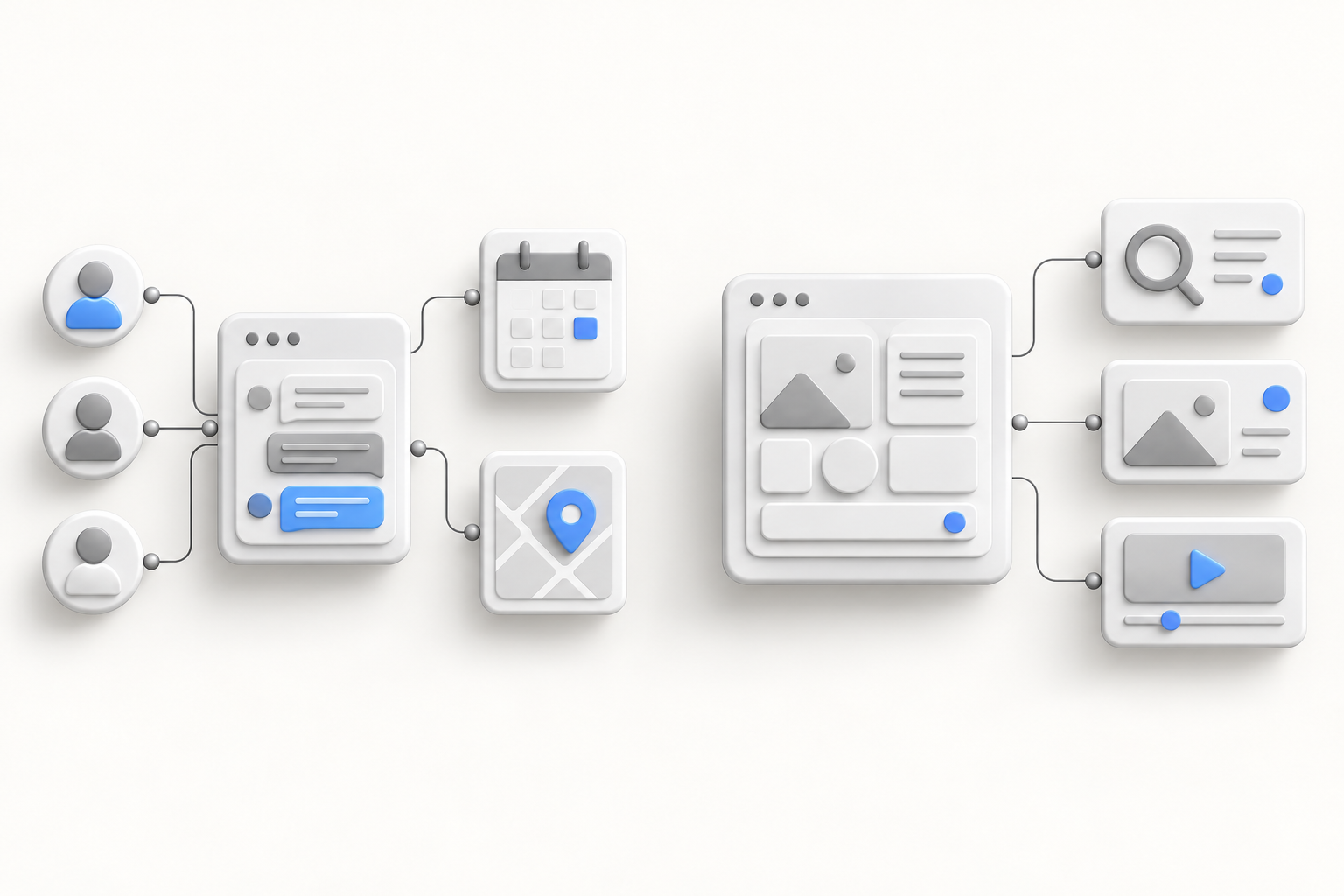
Think of Frevana as “Wabi for business”: an Agentic App Builder focused on helping brands grow. Wabi emphasizes personal assistance and shared activities; Frevana brings the app-centered approach to business work, including Agentic SEO, Agentic AEO, and advertising.
The phrase describes a positioning analogy, not a relationship between the companies. The useful comparison is the job you want an agent to do: organize everyday life with other people, or help a team turn a growth objective into repeatable work.
Why Wabi's Latest News Matters
On October 29, 2026, TechCrunch reported Wabi's $55 million funding round at a $1.25 billion valuation. Read the TechCrunch report.
Wabi's own announcement confirms those figures and identifies IVP as the round's lead investor. It describes a personal assistant that combines agents, mini-apps, and shared spaces. See Wabi's official funding announcement.
PYMNTS highlights the group-coordination angle: bringing an assistant into conversations to help with plans, schedules, and everyday tasks. Its October 29 report describes shared tools such as travel itineraries. Read the PYMNTS coverage.
Our interpretation is that these developments point toward software built around a task and the people doing it. An answer can become an interface people return to, rather than a message they must repeatedly reconstruct. For business teams, that raises an interesting question: what would an app built around a growth workflow look like?
What Is Wabi Focused On?
Wabi's current website presents an assistant for shared use. Its examples include planning a trip, booking a stay, and turning a group-chat idea into a game. It also describes widgets and moving between computer and phone. Explore Wabi's official website.
That is a consumer-first proposition: help people coordinate, decide, and do things together. Wabi's company announcement gives examples such as shared meal planning and book-club tools that people can revisit and adapt.
This public positioning does not establish that Wabi is incapable of business tasks. It establishes the audience and scenarios the company currently emphasizes. A fair comparison should evaluate those stated uses rather than invent missing features.
What Is Frevana Focused On?
Frevana is an Agentic AEO/Ads and Agent Apps Platform that uses AI agents to help brands grow their business. Agent Apps can also be called Agentic Apps. The Agentic App Builder is central to that approach: build an interface around the work a business needs to complete.
Frevana's official site offers no-code app creation and presents an AEO Team, Google Ads, AI Product Video, Ad Clone, and visual remix tools. Its examples cover product visuals, videos, and business workflows. Explore Frevana's platform.
For a growth team, the opportunity is to define a recurring job with clear inputs, useful outputs, and a way to judge results. An Agentic App can give that job a consistent interface. Read more about why Agent Apps represent a new kind of software.
Frevana vs. Wabi at a Glance
| Comparison | Wabi | Frevana |
|---|---|---|
| Public positioning | Personal AI for shared everyday activities | Agentic Apps for business growth |
| Typical starting point | A group wants to plan or do something together | A team wants to complete a recurring business task |
| App concept | Personalized mini-apps and shared tools | Agentic App Builder and business-oriented apps |
| Featured scenarios | Trips, plans, games, and household coordination | AI visibility, advertising, and creative production |
| Useful evaluation question | Does it make the shared activity easier? | Does it improve the quality or efficiency of the business workflow? |
The product descriptions above reflect the companies' public materials; the evaluation questions are our suggested way to assess fit. This is a comparison of focus, not a ranking or an assertion that either product exclusively serves one audience.
What “Wabi for Business” Means in Practice
A shared travel planner and a campaign planner have something in common: both need more structure than an open-ended conversation. People need to see the inputs, review options, make decisions, and return to the result.
The business version adds a commercial objective. A team needs to know which audience it is trying to reach, which product facts are approved, what work has been completed, and how performance will be evaluated.
Consider a hypothetical outdoor brand preparing a backpack launch. The team could design an Agentic App around a product brief, approved specifications, audience questions, and creative assets. The output might include a research summary, proposed content changes, and an organized set of campaign concepts. These are example workflow designs to evaluate, not claims that one app automatically completes an entire launch.
Agentic SEO: Turn Search Research Into a Work Queue
A useful Agentic SEO brief defines the pages to review, the intended audience, and the evidence available. Ask for a prioritized list of issues with source links and proposed fixes.
For the backpack brand, the work might be to identify where size, laptop compatibility, or carry-on dimensions are unclear. Measure the number of verified issues resolved and the time required to review the work. Search traffic can be monitored separately after publication.
Agentic AEO: Connect AI Visibility Gaps With Better Answers
Agentic AEO applies agent assistance to answer-focused research and improvements. Start with actual buyer questions, save a baseline of observed answers, and identify missing or contradictory product information.
For example, “Will this backpack fit a particular laptop?” should lead to an answer grounded in verified compartment dimensions. AEO tools are useful when they preserve the evidence behind a finding and help your team decide what to improve. See our e-commerce AEO workflow for a practical starting point.
AI Ads: Make Campaign Decisions Reviewable
For an advertising workflow, specify the offer, audience, budget constraints, and desired outcome. A useful app design would organize proposed angles and explain what each experiment is intended to test.
For the backpack launch, distinguish a commuting message from a weekend-travel message. Review the assumptions before deciding which campaign to run. Confirm the selected app's supported account connections and actions before relying on it to operate a live campaign.
AI Video Ads and AI Image Ads: Build From the Same Product Brief
Creative work benefits from a consistent brief. Supply approved product imagery, accurate claims, brand guidance, and the format needed for each placement.
An image-ad task might explore several compositions for one product benefit. A video-ad task might turn that benefit into a short demonstration with a defined opening, product sequence, and call to action. Treat these as creative-production workflows to configure and review; generating an asset and publishing an ad are separate steps.
Evaluate the outputs for product accuracy, message clarity, usability, and editing time. Judge campaign performance only after a defined test produces actual data.
How to Choose Between Frevana and Wabi
Start with the task rather than the size of a funding round.
Evaluate Wabi for shared personal activities. Its public examples make it a relevant candidate when the goal involves friends, family, plans, and everyday coordination. Test a real activity with the people who will use the result.
Evaluate Frevana for business growth workflows. If the goal involves search visibility, answer research, advertising, or creative work, start with one narrow business brief. Assess the app's output against your existing process before expanding its scope.
For either product, use the same evaluation discipline:
- Define a task with a clear finish line.
- Provide the information needed to do it correctly.
- Check whether the result is accurate and usable.
- Record how much review and correction it requires.
- Confirm current pricing, access, and any required connections for that workflow.
A useful pilot answers “Did this help us complete the job?” before asking how many more apps to create.
Frequently Asked Questions
Is Frevana Literally Wabi for Business?
No. They are separate products. “Wabi for business” is an analogy for Frevana's focus on business-oriented Agentic Apps, compared with Wabi's public emphasis on personal and shared everyday activities.
What Is an Agentic App Builder?
An Agentic App Builder helps turn a task into an application that uses AI agents. The intended result is a reusable interface with defined inputs and outputs, so users can work through the task without recreating the entire setup each time.
Is Wabi Only a Mini-App Generator?
Wabi's current positioning is broader. Its official materials describe personal AI assistance alongside mini-apps and shared spaces. Group coordination is an important part of that proposition.
Can Frevana Be Used for Agentic SEO, Agentic AEO, and Ads?
Those are the business-growth workflows emphasized in this comparison. Define the specific job, choose the relevant app or builder workflow, and verify the required inputs and actions. Separate research, draft preparation, asset creation, and live campaign changes when assessing what your setup does.
Does This Comparison Prove Frevana Produces Better Results?
No performance benchmark is presented here. The comparison helps identify which product focus fits your task. Use a representative pilot and measures such as output quality, review time, and completed work to evaluate results.
Build Around the Outcome You Need
Wabi brings attention to personal AI that people can use together. Frevana applies an Agentic App approach to business growth. For a brand, the next step is to choose one recurring job—such as answering product questions or preparing campaign assets—and build a workflow whose results your team can review and measure.
Explore Frevana and start with a concrete business task.