Frevana vs Retool: Which AI App Builder Fits Your Growth Team?
Compare Frevana vs Retool for Agentic AEO, SEO, AI ads, and internal apps. See current product differences and practical workflows for your growth team.
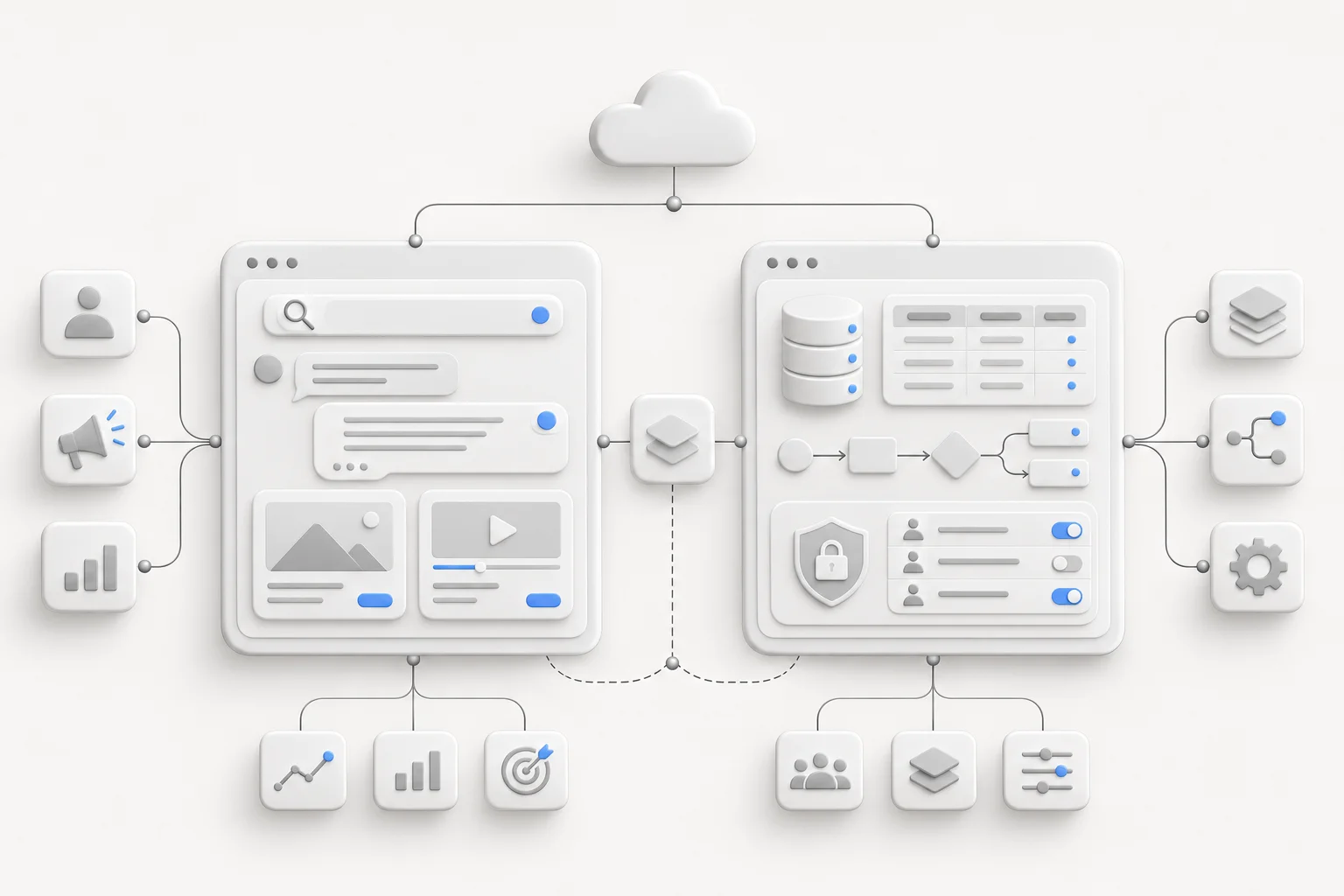
Evaluate Frevana when your starting point is a brand-growth task; evaluate Retool when it is a custom business application connected to operational data. Both belong in a conversation about AI-powered work, but the useful choice depends on what your team needs to deliver.
Frevana is an Agentic AEO/Ads and Agent Apps Platform that uses AI agents to help brands grow their business. Its Agentic App Builder supports the idea of turning recurring growth work into reusable applications. Retool emphasizes building and governing business software, and its current offering goes well beyond its original visual app builder. Explore Frevana and Retool.
This comparison is published by Frevana and reflects public product information checked on November 9, 2026. The workflow examples below are suggested pilots, not comparative performance tests or promises of revenue growth.
What Changed at Retool in 2026?
Older comparisons can give buyers an incomplete picture. Retool's October 28, 2026 changelog announces general availability of its AI app builder, including MCP and CLI access, source control, and expanded management features. Classic drag-and-drop apps remain supported, while new feature development focuses on the AI builder. Read the official availability update.
Retool also announced early access to a centralized agent harness on October 6, 2026. The announcement describes agents working through Slack, Teams, and Google Chat, with centrally controlled tools and policies. This was an early-access announcement with a waitlist, not evidence of universal availability. Read Retool's agent harness announcement.
These developments change the buying question: compare the work each platform helps you complete and the controls your team needs, rather than assuming only one has AI agents.
What Is Retool—and What Does the Superblocks Guide Get Right?
The supplied Superblocks introduction to Retool offers a useful starting description: teams build dashboards, admin tools, and workflows around business data. Its discussion of components and data connections explains the classic low-code approach.
However, Superblocks sells a competing platform. Its rankings and judgments about superiority are vendor opinions, not independent benchmarks. Its emphasis on Assist and component-only generation also needs updating: Retool's official notice states that Assist would no longer be available in the classic builder starting September 30, 2026. Existing classic apps remain supported. See the Assist retirement notice.
Today, Retool's homepage describes prompt-based app creation, building through external coding agents, importing React code, and deploying with authentication, access controls, and audit logging. Buyers should evaluate the current builder instead of treating limitations of the older experience as universal product limitations. See Retool's current platform overview.
Where Frevana Fits: Agent Apps for Business Growth
Frevana's public site presents no-code Agent App creation alongside AEO Team, Google Ads, AI Product Video, Ad Clone, and visual remix tools. These provide growth-oriented starting points for AI visibility, campaign planning, and creative production. See the featured Agent Apps.
The practical appeal is organizing a business objective into a repeatable process: provide a brief, gather evidence, prepare outputs, and review the next action. Agentic SEO, Agentic AEO, AI Ads, AI video ads, and AI image ads are useful workflow categories for evaluating that approach. Confirm the selected app's actual inputs, integrations, and supported actions before relying on a particular automation.
For background, read how Agent Apps turn business tasks into reusable software.
Frevana vs Retool at a Glance
| Decision | Frevana | Retool |
|---|---|---|
| Public product emphasis | Agent Apps for brand growth | AI-built business software and governance |
| Starting point to evaluate | A growth brief or featured Agent App | A custom app, operational data, and user requirements |
| Relevant public examples | AEO, ad planning, product video, visual remix | App generation, React imports, data connections, access controls |
| Suggested first pilot | Prepare an evidence-backed content or creative package | Build an internal review or operations interface |
| Key acceptance question | Can the team use the output with manageable review effort? | Does the app handle the required data and permissions correctly? |
Product descriptions summarize the official pages linked above; pilot choices are our recommendations. This is a comparison of starting points, not a claim that either platform exclusively serves one department.
Five Practical Growth Workflows to Evaluate
Consider a fictional home-goods brand launching a desk lamp. Its team needs accurate product information, useful content, and campaign assets. The following briefs illustrate how to evaluate an Agentic App approach; they are not claims that a single prebuilt app performs every step automatically.
1. Agentic SEO: Improve Pages Buyers Already Need
Supply product specifications, existing page URLs, and a search-performance export. Ask for a prioritized content brief identifying unanswered questions about dimensions, brightness, and compatibility. Require each proposed factual change to point to an approved source.
The first deliverable should be a reviewable work queue. Measure accepted recommendations and editing time, then monitor search results after approved changes are published. Avoid confusing more generated pages with more useful content.
2. Agentic AEO: Make Product Answers Easier to Verify
Start with a small set of buyer questions, such as whether the lamp fits a narrow desk. Record the answer engine, date, prompt, and cited sources when collecting a visibility baseline. Turn missing or inaccurate information into specific page improvements.
Evaluate evidence quality and whether the proposed answer matches the product. Repeat observations under a consistent method; an isolated AI answer is not a stable ranking. Our e-commerce AEO guide provides another practical starting point.
3. AI Ads: Turn an Offer Into Testable Campaign Ideas
Provide the offer, audience, landing page, and budget constraints. Request distinct campaign hypotheses—for example, a small-space message versus a reading-comfort message—with draft copy and the evidence behind each claim.
Decide which actions remain drafts and which require permission to change a live account. Compare cost per accepted campaign brief first; assess acquisition costs only after running a measured campaign.
4. AI Video Ads: Build a Product Story From Approved Assets
Provide accurate product photos, usage instructions, brand guidance, and placement requirements. Ask for a short storyboard showing the problem, the lamp in use, and a clear call to action.
Review generated scenes for altered product geometry, invented features, and unreadable text. Track the number of usable cuts and the time spent correcting them before testing audience response.
5. AI Image Ads: Explore Variations Without Changing the Product
Use the same approved brief to request different backgrounds, crops, and message treatments. Keep the product and its factual claims consistent so the experiment tests a creative choice.
Review dimensions, legibility, and product fidelity. An attractive image is a production output; its advertising value still needs a campaign test.
When Retool Belongs in the Same Growth Stack
A marketing team may also need an internal interface for campaign approvals, product data, or spending reports. A suggested Retool pilot could display campaign records, let reviewers record decisions, and expose only the actions each role should perform. That is a custom application to implement and test, not a prebuilt feature asserted by this article.
The products can address different parts of one process: growth work produces briefs and assets; operational software organizes records and decisions. Using both would require checking data exchange and access requirements. No native Frevana–Retool integration is assumed here.
How to Choose Without Relying on a Vendor Ranking
Run a narrow pilot with a real owner, representative inputs, and a written definition of success:
- Choose the deliverable. A reviewed campaign package and a working internal app need different acceptance criteria.
- Check connections and actions. Confirm required data access, supported outputs, and who authorizes changes.
- Measure the full effort. Include setup, review, corrections, maintenance, and usage costs.
- Test a failure case. Supply a missing specification or an invalid record and inspect how the workflow handles it.
- Expand after acceptance. Add a second workflow only when the first reliably meets the team's needs.
Avoid declaring either platform cheaper without a scoped estimate. Request current terms for the actual users, usage, deployment, and support required by your pilot.
Frequently Asked Questions
Is Frevana a Retool Alternative?
It is worth evaluating when the reason for considering an app builder is a growth task such as AEO research or ad creative preparation. For a custom operational application, compare the data model, controls, and implementation requirements directly. The products are not interchangeable in every use case.
Does Retool Have AI Agents?
Yes. Retool offers an Agents product, and its October 2026 harness announcement extends its agent direction. Distinguish an available product from features announced for early access when evaluating your account.
Is Retool Still Only a Drag-and-Drop Builder?
No. The current platform includes an AI app builder and React import paths. Classic apps remain supported, but descriptions centered on Assist do not reflect the current product direction.
Can Agentic SEO and AEO Guarantee Traffic or AI Recommendations?
No such guarantee is established by this comparison. Evaluate research accuracy, completed improvements, and observed outcomes over time. Keep publishing quality and business results separate from the volume of generated output.
Should a Growth Team Start With Frevana or Retool?
Start by testing the closest match to the required deliverable. For growth content and creative work, explore a relevant Frevana Agent App. For custom internal software, test a Retool implementation against your operational requirements. Let an accepted result determine the next investment.
Choose one recurring growth task and give it a precise brief, an accountable reviewer, and a measurable finish line. Explore Frevana's Agent Apps to begin that evaluation.