Why Frevana Agent Apps Represent a New Kind of Software
Why Frevana Agent Apps Represent a New Kind of Software
From applications people simply use to software they can create, share, and reshape.
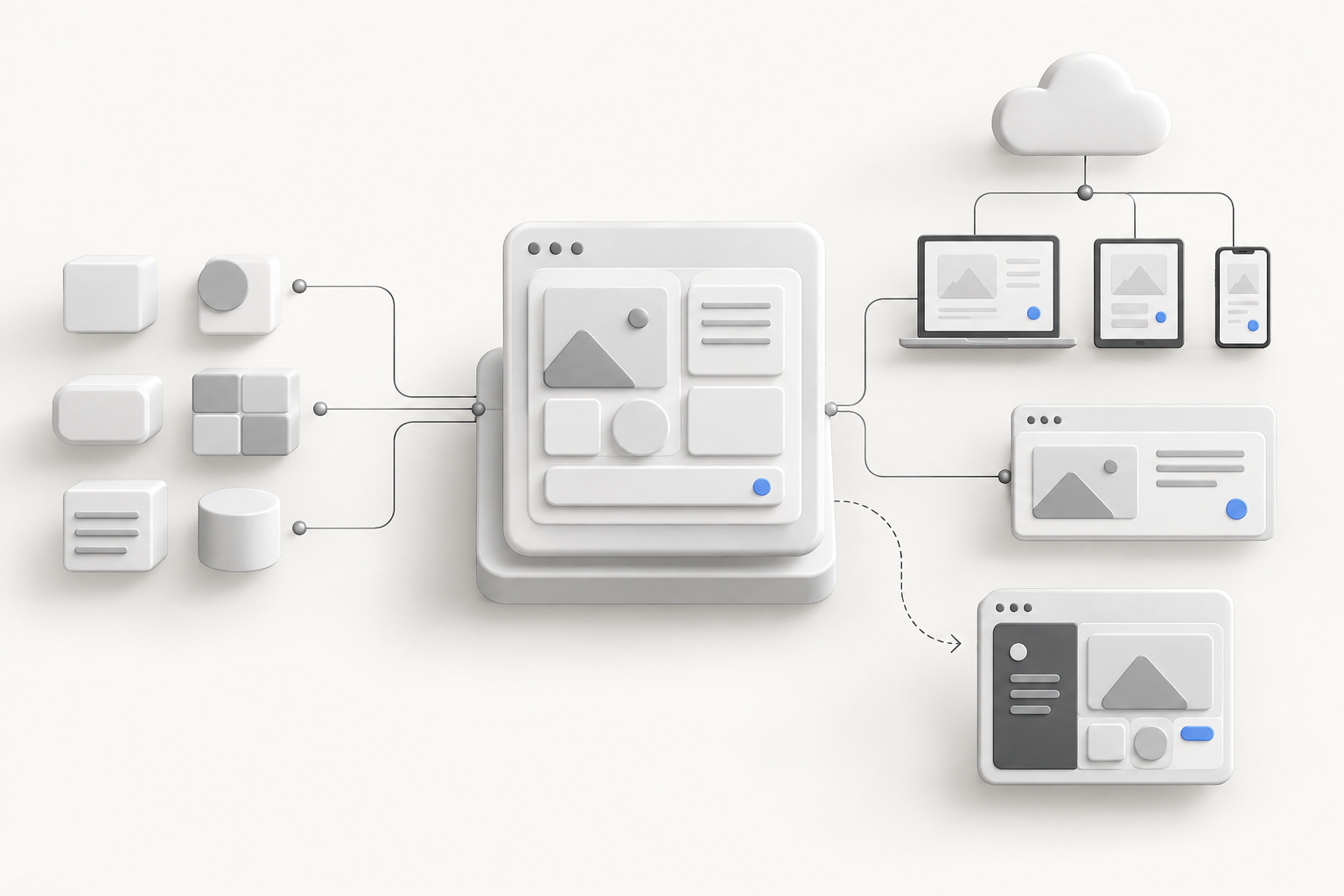
Mobile apps changed computing by making software accessible, purpose-built, and easy to distribute. We believe Agent Apps could play a similarly transformative role in the age of AI—not simply by adding intelligence to existing applications, but by changing how software is created, shared, and improved.
Traditional applications are usually built by developers, distributed as finished products, and updated on the developer's schedule. Users can configure some settings, but they rarely have the ability to change how the software fundamentally works.
Frevana Agent Apps introduce a different model: software assembled from reusable units, shared with others, and adapted by the people who use it.
Agent Apps can also be called "Agentic Apps."
Three capabilities make this approach fundamentally different.
1. Software Becomes Faster and Easier to Create
Building an application has traditionally required teams to design interfaces, implement logic, connect components, test workflows, and manage deployment. Even a relatively focused internal tool can demand substantial time and engineering effort.
Agent Apps reduce the need to start from scratch. With Frevana, creators can assemble applications from reusable software units rather than rebuilding common capabilities for each project. This modular approach makes it easier to turn an idea into working software and to reuse proven pieces across different applications.
The implications extend beyond development speed:
- Shorter paths from idea to execution. Creators can spend more time defining the problem and less time recreating foundational components.
- More experimentation. Teams can test a workflow, learn from real usage, and refine the application without treating every iteration as a new project.
- Broader participation. People closest to a business problem can take a more active role in shaping the tools built to solve it.
Depending on complexity, applications that once required lengthy development cycles may be achievable in days, hours, or, for simpler use cases, minutes. The larger shift is that building useful software becomes a more accessible and iterative process.
2. Software Becomes as Easy to Share as a Link
Creating an application is only part of the challenge. Conventional software distribution often involves packaging, installation, environment setup, or a separate deployment process.
Frevana Agent Apps are designed to make sharing a natural extension of creation. Once an Agent App is ready, its creator can publish it and share access through a link. Another person can open it and begin using it without having to rebuild the underlying application.
This changes the role software can play in everyday collaboration. A useful workflow no longer has to remain a private tool or a one-off prototype. It can be shared with a colleague, a team, or a wider audience as a working application.
Think about the difference between sending someone instructions for a process and sending them the process itself, packaged as usable software. The second option helps turn individual knowledge into something others can put to work immediately.
But distribution is only the beginning. The most consequential change happens after the recipient opens the app.
3. Users Can Adapt the Software Themselves
For decades, the relationship between software creators and users has followed a familiar pattern: developers decide what an application can do, and users work within those boundaries.
When a user needs a different workflow or a missing feature, the usual options are limited: submit a request, find a workaround, adopt another tool, or commission custom development.
Frevana Agent Apps make the user part of the software's evolution. With the built-in Agent App Builder, someone who receives an Agent App can modify it to better fit their needs.
They can, for example:
- Add functionality for a new task or requirement.
- Remove steps or features that are not relevant.
- Adjust the sequence of a workflow.
- Tailor an application to a particular team or company.
- Personalize the experience for a specific role or working style.
Consider a reporting Agent App created for one team. A colleague in another department might need different inputs, additional review steps, or a different output format. Rather than waiting for the original creator to prioritize those changes, the recipient can adapt the app to their own workflow.
The result is a new relationship between creators and users. Publishing no longer has to mark the end of an application's design process. It can mark the beginning of many user-driven improvements.
From a One-Way Delivery Model to a Continuous Creation Loop
The conventional software model is largely linear:
Developer → Application → User
Agent Apps enable a more participatory cycle:
Creator → Agent App → User → Customization → Adapted Agent App
In the first model, the original developer remains the primary source of change. In the second, users can become creators themselves, adapting working software for new contexts and needs.
This is more than an improvement to the development process. It changes what it means to own a workflow: instead of accepting the limits of a predefined application, people can shape the software around the work they actually need to accomplish.
One Agent App, Multiple Environments
Adaptability should not end at the application interface. Where software runs also matters.
Frevana Agent Apps are designed to span desktop and cloud environments. An Agent App can run on a Mac, and it can also run in the cloud as a Web Agent App, accessible through a browser.
That flexibility opens up a straightforward workflow: create an Agent App on your desktop, share it with someone else, and let that person use or customize it for their own needs. When deployed as a Web Agent App, the application can also be accessed through the web rather than being tied to a single desktop environment.
The underlying idea is simple: software should be able to move with the people and workflows it serves. Its usefulness should not depend on where the original creator built it.
What This Changes for Teams and Organizations
Taken together, these capabilities point toward a different model of software adoption.
Instead of choosing between rigid off-the-shelf applications and expensive custom development, teams can start with a working Agent App and adapt it as requirements evolve. A tool built for one use case can become the starting point for another. Ideas can be shared as functioning software, not just specifications or screenshots.
For creators, this means a faster path to distributing useful tools. For users, it means more control over the workflows they depend on. For organizations, it creates the possibility of software that stays closer to the needs of the people doing the work.
Of course, greater flexibility also makes thoughtful testing, permissions, and governance important—especially as applications are shared across teams. But the opportunity is significant: software can become less static, more collaborative, and more responsive to change.
Building for the Next Era of Software
The smartphone era made apps a familiar way to access digital capabilities. We believe the agent era will introduce a new expectation: people will want software they can not only use, but also assemble, share, and reshape.
That is the direction we are pursuing with Frevana.
We are not simply building another AI-powered application or another tool for generating apps. We are building a platform for a more adaptable kind of software—one in which creation, distribution, and customization are part of the same experience.
We call them Agent Apps.