AEO for E-commerce: 5 Steps to Turn AI Visibility Into Growth
Build an e-commerce AEO workflow with buyer questions, accurate product data, and measurable outcomes. Learn where Agentic SEO, Agentic AEO, and AEO tools fit.
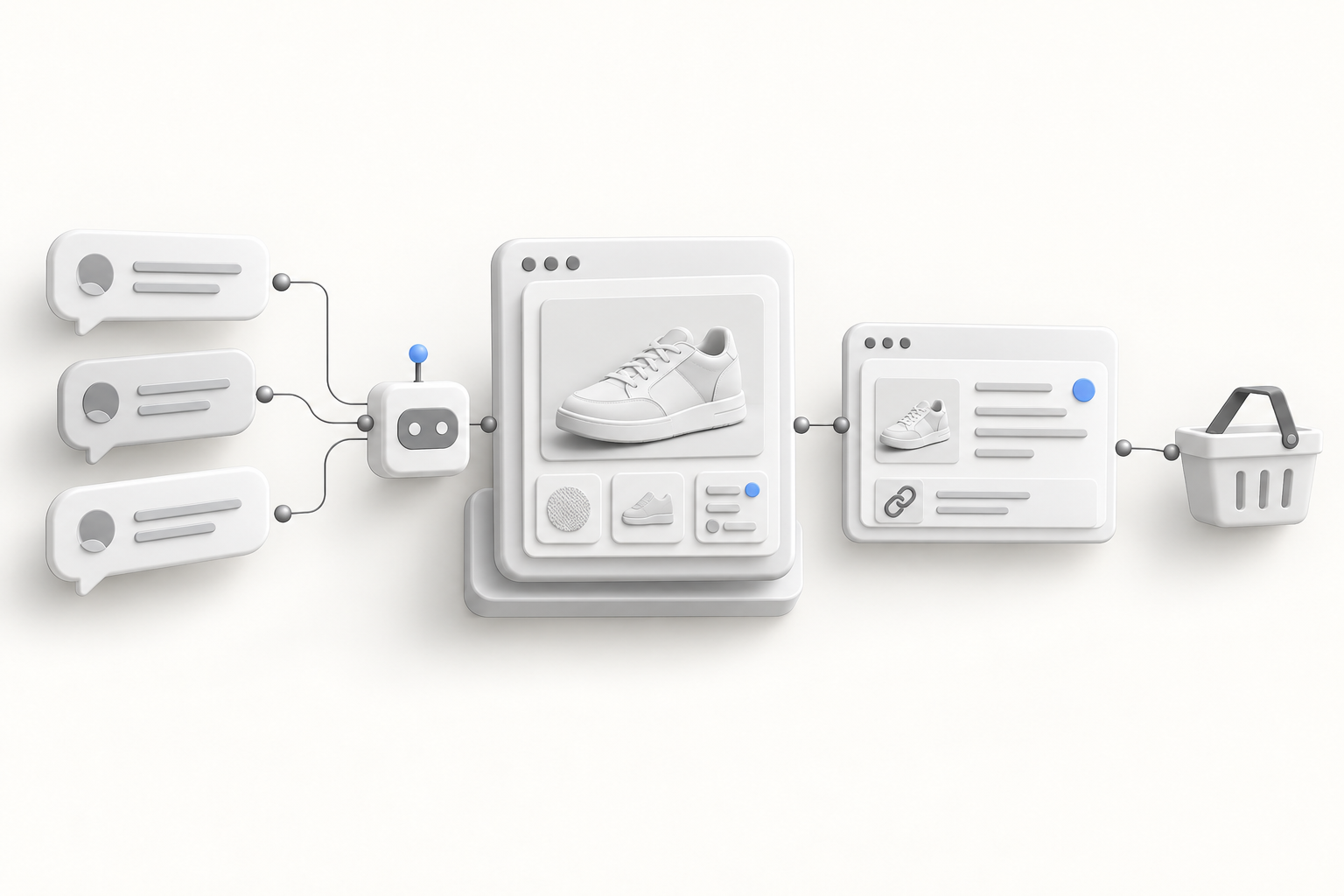
A shopper asking “Which shoes work for a long commute in wet weather?” is describing a decision. A product page that repeats “commuter shoes” without explaining materials, fit, or care leaves that decision unresolved.
Answer engine optimization, or AEO, helps e-commerce brands make their product information easier to discover, understand, and use in answers. The practical opportunity is to connect useful AI visibility with suitable purchases: answer the buyer's question, support the answer with evidence, and make the next step clear.
Agentic SEO and Agentic AEO bring AI agents into this work. Agents can help organize research, identify missing information, and prepare improvements. Your growth plan still needs accurate product facts, a clear customer journey, and measurement beyond a mention count.
What Is Changing in E-commerce Discovery?
Conversational shopping adds another place where people can research products and compare options. Amazon describes Alexa for Shopping as supporting product research, comparisons, personalized guidance, and shopping actions. Its announcement specifies U.S. availability on supported surfaces, including the Amazon Shopping app and website. Read Amazon's official overview.
For brands, this creates a concrete content problem: a shopper can ask a detailed question that a short category label does not answer. That question might involve compatibility, installation, delivery, maintenance, or whether a cheaper variant meets the same need.
Traditional search remains part of the journey. Google says established SEO practices also apply to AI Overviews and AI Mode; there are no special additional optimization requirements for appearing in those experiences. See Google's guidance on AI features.
The useful response is to improve the information customers need across search, answers, and product pages, then evaluate how each channel contributes.
SEO, AEO, and Agentic AEO: What Is the Difference?
| Approach | Main work | E-commerce example | What to measure |
|---|---|---|---|
| SEO | Improve search discoverability and the usefulness of landing pages | Fix an inaccessible category page and clarify product names | Search impressions, relevant visits, conversions |
| AEO | Make buying questions answerable with accurate, accessible evidence | Explain which shoe variant has a verified water-resistant upper | Sampled answer accuracy, brand presence, source citations |
| Agentic SEO | Use agents to assist search optimization tasks | Review a catalog for missing titles or inconsistent attributes | Verified issues resolved and review time |
| Agentic AEO | Use agents to assist answer research and improvement workflows | Group buyer questions, map sources, and draft missing explanations | Completed corrections, observed answer changes, business outcomes |
These are overlapping workflows. Agentic describes how work gets done; it does not establish a new ranking factor. A clear specification can help a shopper, support a search landing page, and supply evidence for an answer at the same time.
Step 1: Audit AI Visibility Around Buying Decisions
Choose one category and a manageable set of products. Gather questions from customer support, returns, sales conversations, and your existing search research. Start with questions whose answers could change the purchase decision.
For a footwear brand, the question set could include:
- Which model suits a wet-weather commute?
- How does sizing differ between two models?
- Is the insole removable?
- What cleaning method does the manufacturer recommend?
- What are the return conditions for this market?
Test relevant questions in the answer experiences your customers use. Record the exact prompt, date, market, platform, conversation context, answer, and any visible source links. On Amazon, review Alexa for Shopping separately from general web answer engines.
Label each observation: brand mentioned, product shown, website cited, or answer incorrect. A mention is different from a citation, and neither proves a sale. Keep this baseline so later comparisons refer to a documented sample.
Step 2: Make Product Facts Accessible and Consistent
Review whether your important product and category pages can be crawled and indexed, whether internal links expose them, and whether essential facts are available as readable text. Check robots directives and page-level indexing settings before investing in more copy.
For Google AI features, Google specifically says you do not need new machine-readable files or special schema. It also recommends that structured data match the visible page content. Treat an llms.txt file as optional experimentation, not an eligibility requirement. Read the technical requirements.
Create a reliable product fact sheet for each variant:
| Information | Check before publishing |
|---|---|
| Identity | Model, SKU, size, color, and variant are unambiguous |
| Specifications | Measurements, materials, and compatibility match approved documentation |
| Offer | Price, currency, and availability reflect the actual offer |
| Purchase conditions | Shipping, returns, and warranty statements match current policies |
| Limitations | Important exclusions and care requirements are stated clearly |
On your own store, appropriate Product structured data can make product information eligible for richer Google search appearances, including details such as price and availability. Google also describes using Merchant Center feeds alongside structured data. Neither is a promise of an AI recommendation. See Google's Product documentation.
For marketplace listings, use the fields and controls the marketplace provides. Keep those facts consistent with your store and documentation without assuming you control the marketplace's technical implementation.
Step 3: Publish Answers That Help Customers Choose
Turn the highest-priority questions into useful product explanations, comparison pages, buying guides, and FAQs. Put the direct answer near the question, then add the conditions and evidence a buyer needs.
Weak copy: “Our innovative shoes deliver unbeatable comfort in every situation.”
More useful copy: “Compare the upper material, sole construction, and care instructions before choosing a commuting shoe. For wet conditions, check the model's documented water-resistance limits; do not assume every variant has the same protection.”
For an actual product, replace general advice with approved specifications. Avoid inventing a waterproof rating or performance claim to make the answer sound complete.
A useful comparison explains who each option suits. For example, compare removable insoles, available widths, weight, and maintenance requirements when those facts matter to your customers. Cite the product documentation and identify any unresolved details.
Independent reviews and relevant editorial coverage can provide additional perspectives. Pursue accurate, useful coverage rather than treating a mention or backlink as an automatic recommendation trigger.
Step 4: Use AEO Tools to Turn Findings Into Work
Select AEO tools according to the decision they help you make. A dashboard that reports a visibility gap and an agent that prepares a correction perform different jobs; your process may need both.
| Tool capability | Useful output | What to inspect |
|---|---|---|
| Answer monitoring | Saved answers for a defined prompt set | Platform, market, collection method, and repeatability |
| Citation analysis | Sources displayed in sampled answers | Actual links and surrounding answer context |
| Content auditing | Missing or contradictory product facts | Evidence for each finding and correct variant mapping |
| Agent-assisted drafting | Proposed answers or page edits | Source references, unresolved facts, and editorial quality |
| Business reporting | Visits, orders, and other available outcomes | Attribution coverage and measurement limits |
Ask for a demonstration using your own category. Confirm supported platforms directly; coverage of one answer engine does not establish coverage of Amazon Alexa for Shopping. Compare costs for the same prompt volume, frequency, markets, and required workflow.
A practical agent brief is:
Review these product pages against the supplied fact sheets. Group the buyer questions by intent, identify missing answers, and draft corrections with evidence links. Keep variants separate and flag facts that need an owner to verify them.
Start with a small batch and review the output before scaling. Read our AEO tools comparison for a broader selection framework.
Where Frevana Fits
Frevana is an Agentic AEO and Agent Apps Platform that uses AI agents to help brands grow their business. Its platform presents an AEO Team alongside apps for other business tasks, including advertising and e-commerce. Explore Frevana's Agent Apps.
Use a defined question set, approved product facts, and a concrete improvement goal when setting up an Agentic AEO workflow. Evaluate whether the resulting research and proposed actions help your team resolve important gaps. For Amazon-specific work, Frevana Amazon AEO helps brands track and improve Amazon AEO performance; configure the scope for your selected products and market.
Step 5: Connect AI Visibility to Business Outcomes
Measure the work at three levels so an increase in answer mentions does not become an unsupported revenue claim.
Content quality: Track verified questions answered, contradictions corrected, and important product facts kept current. These measures show whether your information improved.
AI visibility: Track product presence, citations, and answer accuracy within your defined sample. Preserve the underlying answers. For example, appearing in 8 of 40 sampled answers means a 20% presence rate for that sample, not a 20% share of all shoppers.
Business outcomes: Track available referral visits, engaged sessions, add-to-cart events, orders, and relevant support or return reasons. Use consistent analytics definitions and identify visits without reliable source attribution.
Google includes traffic from its AI search features in the overall Web performance reporting in Search Console. Do not label that total as AI-only traffic. See Google's measurement guidance.
Record when changes go live and compare similar periods. Seasonality, promotions, stock availability, and platform changes can all affect results. Treat a visibility improvement as an observation to investigate alongside commercial performance.
A 30-Day E-commerce AEO Pilot
| Period | Focus | Deliverable |
|---|---|---|
| Week 1 | Select one category and collect buyer questions | Documented prompt set and baseline answers |
| Week 2 | Audit access, variants, and product evidence | Prioritized list of verified information gaps |
| Week 3 | Review and publish focused improvements | Updated pages, product facts, and change log |
| Week 4 | Repeat observations and review customer outcomes | Findings, unresolved issues, and next actions |
The first month establishes a repeatable process. Choose the next category based on useful findings and team capacity, rather than the number of pages an agent can generate.
For brands with physical stores, apply the same discipline to location-specific information: opening hours, services, pickup conditions, and local availability. Keep each location accurate so customers can act on the information they find.
Frequently Asked Questions
Does AEO Replace E-commerce SEO?
No. Crawlable pages, clear product information, and useful content support both. AEO adds a focus on the questions people ask and how products are represented in answers.
What Is the Difference Between Agentic SEO and Agentic AEO?
Agentic SEO uses AI agents to assist search optimization work. Agentic AEO applies agent assistance to answer-focused research and improvements. Both need reliable inputs and a way to verify completed work.
Do We Need Expensive AEO Tools to Start?
Start with a small question set, a spreadsheet of observations, and verified product information. Consider paid tools when the required monitoring volume, platforms, or collaboration make manual work impractical. Compare the evidence and workflow you receive, not just a summary score.
How Should We Optimize for Amazon Alexa for Shopping?
Make the relevant product information complete, consistent, and useful for detailed buying questions. Review actual answers in the market you serve and distinguish listing improvements from observed visibility. Our Amazon listing audit guide provides a step-by-step process.
Is Structured Data Enough to Improve AI Visibility?
Structured data supports specific search features when implemented correctly. It does not replace readable, accurate content or establish eligibility across every answer engine. Follow each platform's documented requirements.
How Quickly Will AEO Increase Sales?
There is no universal timeline. Begin by measuring resolved content gaps and observed answer changes, then evaluate customer behavior and orders where attribution is available. Use those findings to decide what to expand.
Start With the Questions That Block a Purchase
Choose one product category, identify the questions customers struggle to answer, and fix the most consequential information gaps. Use AEO tools and agents to make that work repeatable. A growth-focused Agentic SEO and Agentic AEO program connects better information with observed AI visibility and customer outcomes your team can actually measure.