11 AEO Tools for E-commerce Brands: AI Visibility and Citations
Compare 11 AEO tools for e-commerce brands and learn how to measure AI visibility, improve product content, and track brand mentions and citations.
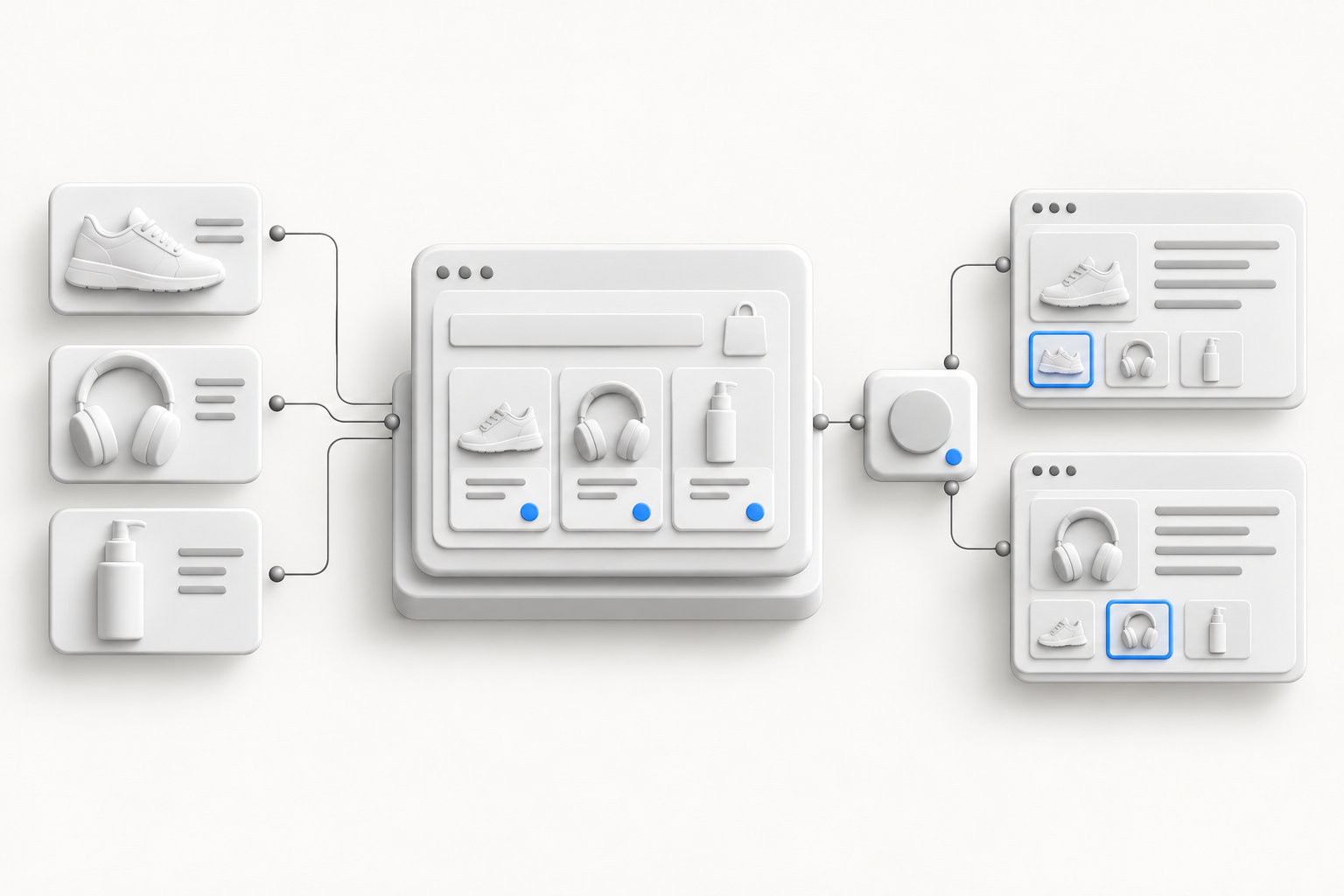
A shopper asking an AI assistant to compare running shoes or recommend skincare brands may discover a business before visiting its website. For e-commerce brands, that creates another place to compete for attention: the answer itself.
Answer engine optimization (AEO) is the practice of making brand information and website content easier to discover, understand, and reference in generated answers. AEO tools help teams investigate where their brands appear, which sources receive citations, and what content or technical work deserves attention.
This guide compares eleven tools through an e-commerce lens, then explains how to turn visibility research into better product pages, buying guides, and measurement. The list is a selection guide, not a scored performance ranking; the right choice depends on your catalog, team, and reporting needs.
Why AEO Matters for E-commerce Brands
Traditional SEO helps shoppers discover pages through search results. AEO extends that work to questions that invite a synthesized response, such as:
- Which carry-on luggage brands offer replaceable wheels?
- What is the difference between mineral and chemical sunscreen?
- Which coffee grinder is suitable for a small kitchen?
- Does this brand offer international returns?
These questions span discovery, comparison, and purchase reassurance. Useful answers depend on clear facts: product specifications, intended uses, limitations, availability, and policies.
A brand mention and a citation are different outcomes. A mention names your business; a citation references a source, sometimes with a link. An answer can mention your brand while citing a retailer, review publication, or competitor. Track both to understand how your business is represented.
Neither outcome guarantees a visit or sale. Evaluate AEO alongside referral traffic and commercial results, rather than assuming more mentions automatically mean more revenue.
How to Compare AEO Tools
Start with the buying questions your customers actually ask. Then evaluate each platform against five criteria:
- Relevant coverage: Does it monitor the answer engines, languages, and markets your customers use?
- Evidence: Can you inspect the underlying answer, cited URL, prompt, and collection date?
- Competitive context: Can you compare brands across a consistent set of shopping questions?
- Actionable findings: Can your team turn the output into specific content or technical changes?
- Total cost: Does the required plan include enough prompts, monitoring frequency, users, and reporting capacity?
Ask how answers are collected and repeated. Different prompts, locations, models, and collection methods can produce different results. A visibility score is useful only when its scope and calculation are clear.
11 AEO Tools to Evaluate
1. Frevana: Agentic AEO for Brand AI Visibility
Frevana offers Agentic AEO, using AI agents to help brands improve their AI visibility. For e-commerce brands, this brings agent assistance into the work of making product and brand information easier to discover and understand in AI-generated answers.
When evaluating Agentic AEO, use your own store and customer questions to understand how the agents support your optimization workflow. Ask which tasks they handle, how recommendations become actionable improvements, and how your team can review the results.
E-commerce evaluation task: Start with one product category and evaluate how Frevana's agents help your team improve its AI visibility. Compare brand mentions, citations, and answer accuracy before and after the work using a consistent set of shopping questions.
2. BrightEdge: An Enterprise Evaluation Candidate
BrightEdge belongs on the shortlist for larger teams assessing AI search alongside established SEO operations. Conductor's industry overview describes its AI Catalyst offering as part of an enterprise search optimization toolkit. Review the current product scope with BrightEdge before deciding which monitoring needs it covers. See the industry overview.
E-commerce evaluation task: Ask for a demonstration that separates findings by product category, country, and brand so regional teams can act on them.
3. Semrush: SEO and AI Visibility in One Evaluation
Semrush offers an AI visibility solution alongside its search marketing tools. It is a candidate for brands that want to assess answer-engine visibility within an existing SEO workflow. Explore Semrush AI visibility.
E-commerce evaluation task: Compare questions about a priority category with your existing keyword research. Look for buying questions that your current category pages and guides do not answer clearly.
4. Conductor: Connecting Visibility Research to Content Work
Conductor describes its AEO platform as combining AI visibility, content optimization, and technical monitoring. That combination is relevant when multiple teams must move from findings to published improvements. Read Conductor's AEO overview.
E-commerce evaluation task: Test whether a missing recommendation can become a useful content brief, such as a guide explaining materials, sizing, care, or product compatibility.
5. Writesonic: Content and AI Search Optimization
Writesonic positions its platform around finding AI visibility gaps and addressing them through content, citations, and technical work. Evaluate the quality of its recommendations as closely as the reporting interface. Explore Writesonic.
E-commerce evaluation task: Use a category buying guide as a trial project. Check every generated product claim against your catalog, and make sure the result gives shoppers useful distinctions rather than generic promotional copy.
6. Ahrefs: Brand Visibility and Citation Research
Ahrefs offers AEO tools including Brand Radar and prompt tracking. Its product descriptions cover competitive visibility, brand sentiment, and citation sources, making it relevant to teams researching how their brands appear across answers. Explore Ahrefs AEO tools.
E-commerce evaluation task: Identify sources cited for your target shopping questions. Assess whether your own pages provide comparable detail and whether independent coverage accurately describes your products.
7. Botify: Technical Readiness for Complex Stores
Botify's platform includes website analytics, AI agent and bot analytics, catalog readiness, and optimization capabilities. It is a candidate when a large catalog creates discovery and maintenance challenges. Explore Botify.
E-commerce evaluation task: Investigate whether important category and product pages are accessible, whether variants create confusing duplication, and whether essential product details are available to crawlers.
8. Ziptie: Monitoring Brand Mentions and Citations
Ziptie's current site distinguishes its original ziptie.dev product from ziptie.ai, which tracks brand mentions and citations across supported AI search engines. Treat those as separate products when evaluating access and features. See Ziptie's product explanation.
E-commerce evaluation task: Monitor a stable group of comparison questions and inspect the sources behind answers that recommend competing brands.
9. BrandRank.AI: Brand Recommendation Research
BrandRank.AI focuses on how enterprise brands appear in AI recommendations, including tracking priority buying questions. This is relevant when the central question is which brands get recommended and how those recommendations change. Explore BrandRank.AI.
E-commerce evaluation task: Compare recommendations for specific use cases, such as sensitive-skin sunscreen or travel accessories, and review whether the answers represent your product positioning accurately.
10. Nightwatch: Search Rankings and AI Visibility
Nightwatch offers rank tracking, AI tracking, citation intelligence, and reporting. Teams evaluating both traditional search performance and AI visibility can assess whether its combined workflow fits their needs. Explore Nightwatch.
E-commerce evaluation task: Track a category's keywords and related shopping prompts together. Investigate changes in rankings and citations without assuming that one caused the other.
11. Profound: AI Visibility Insights and Agent-Assisted Marketing
Profound combines Answer Engine Insights, citation analytics, prompt research, and AI agents that support marketing work. For e-commerce brands, it is a candidate for connecting research into how AI describes a category with content improvements. Explore Profound.
E-commerce evaluation task: Choose a priority product category, inspect the answers and sources that shape its AI visibility, and evaluate whether Profound's agents can turn those findings into accurate buying guides or product-content updates for your team to review.
AEO Tool Comparison for E-commerce Teams
| Tool | Evaluation focus | Practical store-level test |
|---|---|---|
| Frevana | Agentic AEO: agents that help brands improve AI visibility | Evaluate agent-assisted optimization for one product category |
| BrightEdge | Enterprise search operations | Evaluate reporting across markets and brands |
| Semrush | SEO and AI visibility workflows | Compare keyword coverage with shopping questions |
| Conductor | Visibility-to-content workflow | Turn a content gap into a publishable brief |
| Writesonic | Content and optimization execution | Improve a fact-checked buying guide |
| Ahrefs | Competitive visibility and citation research | Inspect sources cited for category questions |
| Botify | Technical discovery and catalog readiness | Investigate product-page accessibility |
| Ziptie | Answer monitoring | Review mentions and citations across repeated prompts |
| BrandRank.AI | Brand recommendation research | Compare recommendations by product use case |
| Nightwatch | Rankings and AI visibility reporting | Monitor keywords and related prompts together |
| Profound | AI visibility insights and agent-assisted marketing | Turn category and citation research into reviewed content improvements |
How to Build an AEO Strategy for Your E-commerce Brand
Start With a Focused Set of Shopping Questions
Choose one commercially important category. Gather questions from customer support, on-site search, product reviews, and sales conversations. Include unbranded discovery questions as well as branded comparisons and policy questions.
Record the prompt, market, answer engine, date, answer, and cited sources. This baseline gives future comparisons a defined scope.
Make Product Information Specific and Consistent
Replace vague descriptions with details that support a buying decision: dimensions, materials, compatibility, care requirements, warranty terms, and relevant limitations. Keep product names and specifications consistent across product pages, category pages, and guides.
A shopper comparing backpacks benefits more from capacity, laptop dimensions, and water-resistance details than from repeated claims about premium quality.
Publish Answers That Help Shoppers Choose
Create comparison pages, buying guides, and FAQs around real decisions. Answer the question directly, then explain the conditions and tradeoffs. Support claims with product documentation, original testing, or clearly identified evidence where available.
For example, a guide to cookware for induction stoves should explain compatibility and how to verify it, then connect that information to relevant products. Repeating “AEO,” “e-commerce,” or “brands” adds little unless the surrounding content answers the reader's question.
Resolve Technical Obstacles
Review important pages for accidental access restrictions, broken internal links, inconsistent canonical URLs, and missing readable product information. Where you use structured data, ensure it matches the visible page and stays aligned with current product details.
Treat technical checks as part of making content accessible and accurate. Do not assume a particular file, markup change, or audit score guarantees AI citations.
Measure Visibility and Business Outcomes Separately
Track a small set of clearly defined metrics:
- Brand mention rate: The proportion of sampled answers naming your brand.
- Owned-site citation rate: The proportion of sampled answers citing your website.
- Competitive presence: How often selected competitors appear within the same monitored sample.
- Answer accuracy: Whether product details and brand descriptions are correct.
- Referral outcomes: Identifiable AI referral sessions, conversions, and revenue in your analytics.
Keep the monitored sample consistent and document changes. Referral analytics will not capture every influence on a purchase, while sampled answers do not represent every customer's experience.
Frequently Asked Questions About AEO
What Is AEO for E-commerce?
AEO for e-commerce is the work of making product, category, and brand information useful and discoverable for answer engines. It combines clear content, technical accessibility, and measurement of how brands appear in generated answers.
Does AEO Replace SEO?
AEO and SEO address overlapping discovery needs. Stores still need accessible pages and helpful content for traditional search, while AEO adds attention to generated answers, brand mentions, and cited sources.
Which AEO Tool Should a Small Brand Choose?
Choose according to the work you need to do first. A team trying to understand its current visibility needs inspectable monitoring data. A team with known content gaps needs an efficient publishing workflow. Test a small, relevant prompt set before committing to broader coverage.
Can an AEO Tool Guarantee Citations?
No. A tool can help identify patterns and opportunities, but it does not control which sources an answer engine selects. Evaluate progress across repeated observations and business outcomes.
How Should Brands Get Started?
Pick one category, document a baseline, and improve the pages that answer its most important shopping questions. Review the results over time and expand the approach when your team can connect findings to useful changes.
Choose AEO Tools Around the Decisions Your Team Needs to Make
For e-commerce brands, an effective AEO program connects visibility research to accurate product information and better shopping guidance. Choose tools that expose evidence, support your target markets, and help your team identify specific improvements. Then measure whether those improvements strengthen brand representation and contribute to customer discovery.